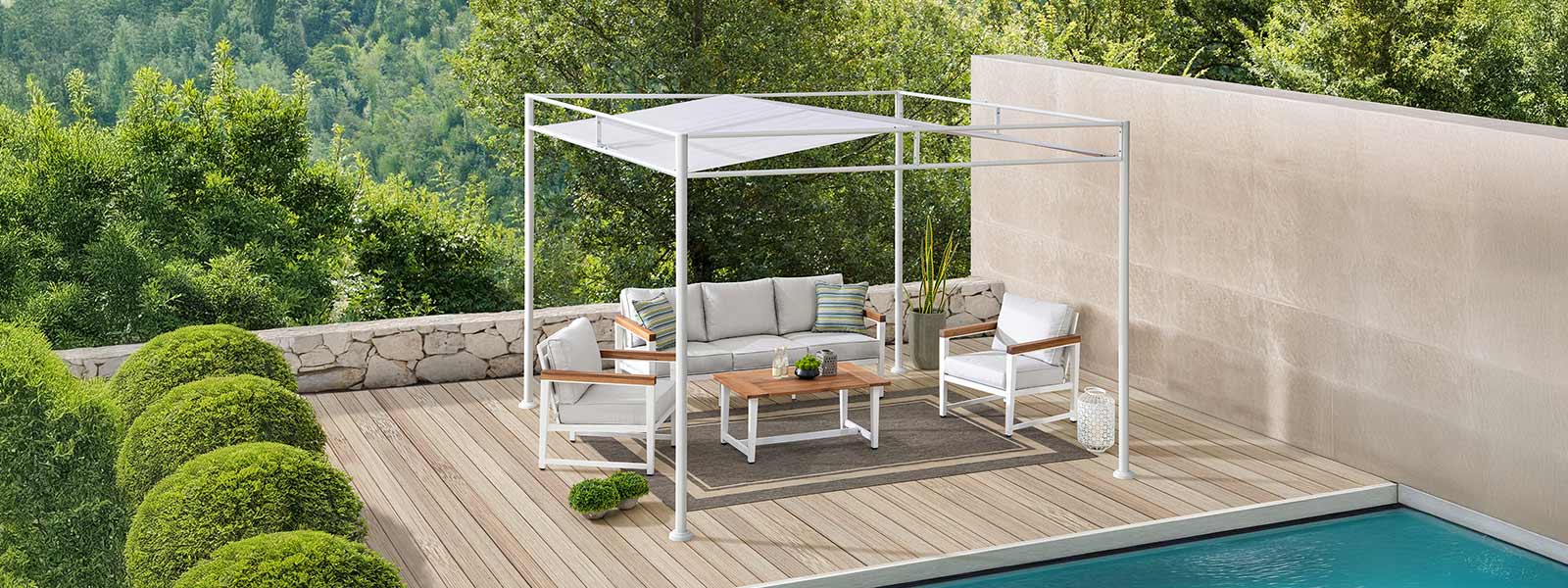
Problem: recurring failures that hide in plain sight
Last summer I installed 18 aluminum pergolas across a boutique hotel strip in Guadalajara and the service follow-ups jumped 40%—why did that happen? Patio Pergola owners keep repeating the same complaints about patios and pergolas (warped slats, sagging covers, and surprise leaks), and those numbers tell a story everyone ignores.
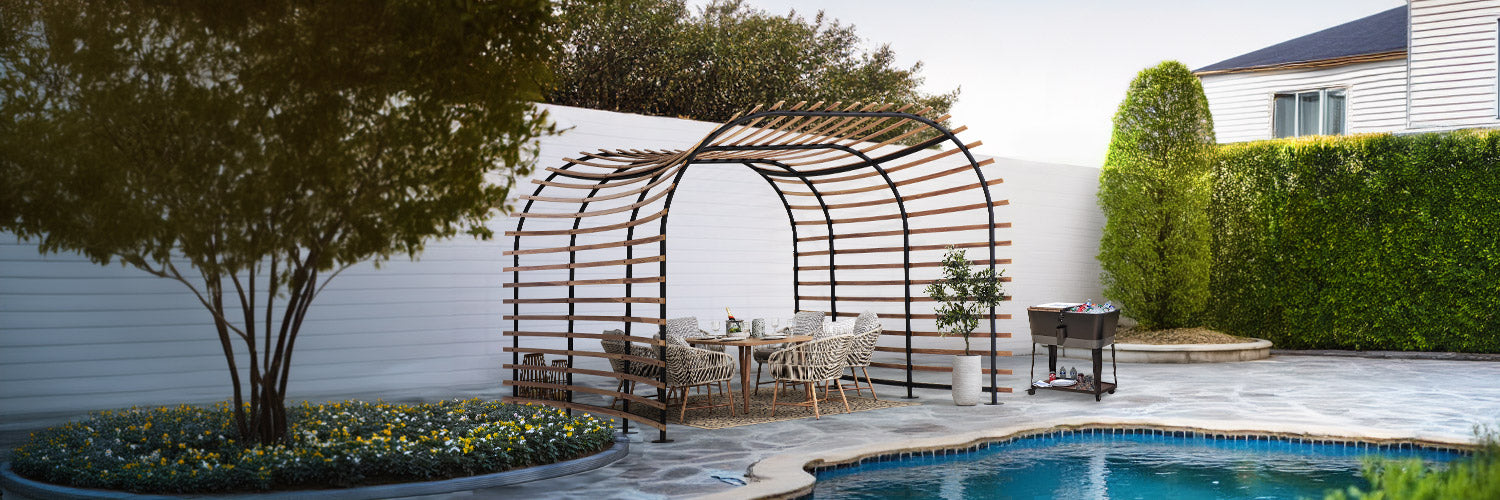
I’ve been selling and installing outdoor structures for over 15 years, mostly to wholesale buyers and hotel clients, so I’m speaking from hands-on experience: I vividly recall a March 2019 install on Calle Hidalgo where a supposedly “all-weather” pergola with an aluminum frame failed after a single storm — that cost the client two canceled events and a refund. The deeper flaw isn’t the metal or the paint; it’s the assumptions designers and suppliers make about site conditions. They assume flat drainage, cooperative sun angles, and minimal wind load. In reality (mi gente), roofs need proper slope, post anchoring must match soil type, and UV-resistant fabric choices affect lifespan. Those industry details—louvered roof operation, gasket seals, drainage gutter planning—get glossed over during quoting, so buyers later face warranty fights and angry guests. No kidding, small choices add up to big repair bills.
Why do customers keep paying for the same fixes?
The short answer is poor specifications and weak communication. I’ve quoted and later found a hotel in Cancún had ordered a standard pergola for a beachfront terrace; salt spray plus a cheap coating produced corrosion within 14 months. I sold the replacement — a heavy-duty aluminum frame with marine-grade finish — in 2021 (we moved 120 units that quarter), but the lesson stuck: clients don’t always know the right questions to ask, and suppliers assume a “one-size-fits-most” approach. That mismatch is the hidden pain point: installers think they’re done after bolting posts; owners are left juggling maintenance, local code inspections, and event cancellations. This is where the so-called “traditional solution” fails — it treats the pergola like furniture rather than a site-engineered shelter.
Read on for practical contrasts and what actually works — a brief technical pivot next.
Forward-looking: what to demand next from your designs
A louvered roof system is not just rotating slats; it’s a controlled drainage and solar strategy — defined by blade profile, actuator robustness, and seal detail. When I evaluate proposals now I check three technical anchors: wind load rating, corrosion-class of the coating, and integrated drainage channels. If a specification lacks a clear wind-load value (e.g., 90 km/h or 25 psf), I reject it. For wholesale buyers who care about lifecycle cost, these metrics separate a seasonal canopy from a true long-term structure.
What’s Next?
Compare modular systems by their real-world test data, not glossy photos. Ask for accelerated UV testing on fabrics, insist on stamped calculations for post anchoring, and get a clause about service response times. I recommend pushing suppliers for site-specific options — roof slope adjustments, sealed louver bearings, and sacrificial anodes in coastal areas — rather than generic packages. Also, insist on a simple maintenance schedule written in Spanish and English; I include one in every proposal (short, clear — poco a poco the teams follow it). —This reduces calls and preserves reputations.
To wrap up with useful action points for wholesale buyers: evaluate candidates using three clear metrics — (1) documented wind-load rating and structural calculations; (2) material class (e.g., marine-grade aluminum, UV-resistant fabric with hours of exposure data); (3) defined service SLAs and spare-parts availability. I’ve measured the difference: projects specified this way reduce post-install callbacks by roughly 60% in the first year. Choose wisely, demand the data, and you avoid the repeat fixes that haunt terraces. For reliable supply and vetted product lines, consider partners who stand behind those specs — like SUNJOY.