The problem: why black poly mailers fail when it matters most
Retailers and fulfilment centres increasingly specify black poly mailers for branding and light‑blocking purposes, yet these mailers often underperform on the handling floor. Failures show up as unexpected punctures, seam splits, or poor seal integrity during high‑volume dispatch. That mismatch between expectation and reality is the problem we address here—examining how material science and co‑extrusion architectures change outcomes. For many operations, a quick comparison with white poly mailers is already revealing: different film constructions yield different behaviours in drop, abrasion and thermal conditions.
How material science and co‑extrusion help solve it
Modern black poly mailers commonly use co‑extrusion to layer films with distinct functions: an outer film for abrasion and printability, a middle barrier layer for moisture or odour control, and an inner heat‑seal layer to secure closures. Terms worth noting here include co‑extrusion, polyethylene film and seal strength. Properly engineered, these multi‑layer structures can combine lightweight cost efficiency with improved tear resistance and controlled friction—so the mailer survives conveyor scraping and manual handling without adding unnecessary bulk or freight cost.
Practical test methods that mirror real‑world stress
Laboratory tests that matter are those that reflect fulfilment‑line realities: dynamic drop tests, puncture resistance with standard probes, accelerated abrasion (to mimic conveyor belts), humid‑heat cycling and peel tests for adhesive seals. A useful protocol pairs mechanical testing with field trials: place instrumented samples in a packing line for several shifts and compare lab numbers against observed failure modes. That dual approach exposes discrepancies between theoretical performance and day‑to‑day robustness.
Observed failure modes and their material causes
Across trials, typical failures fall into three buckets: surface abrasion leading to thinning and puncture, localized stress at seams causing splits, and adhesive degradation under humidity leading to open seals. Abrasion relates to outer film toughness and coefficient of friction; seam splits often reflect inadequate seal strength or poor overlap design; adhesive failures are usually a function of primer choice and the chemistry of the release liner. Identifying the root cause directs you to adjust the film stack, seal temperature, or adhesive system rather than chasing cosmetic fixes.
Alternatives, trade‑offs and the role of white options
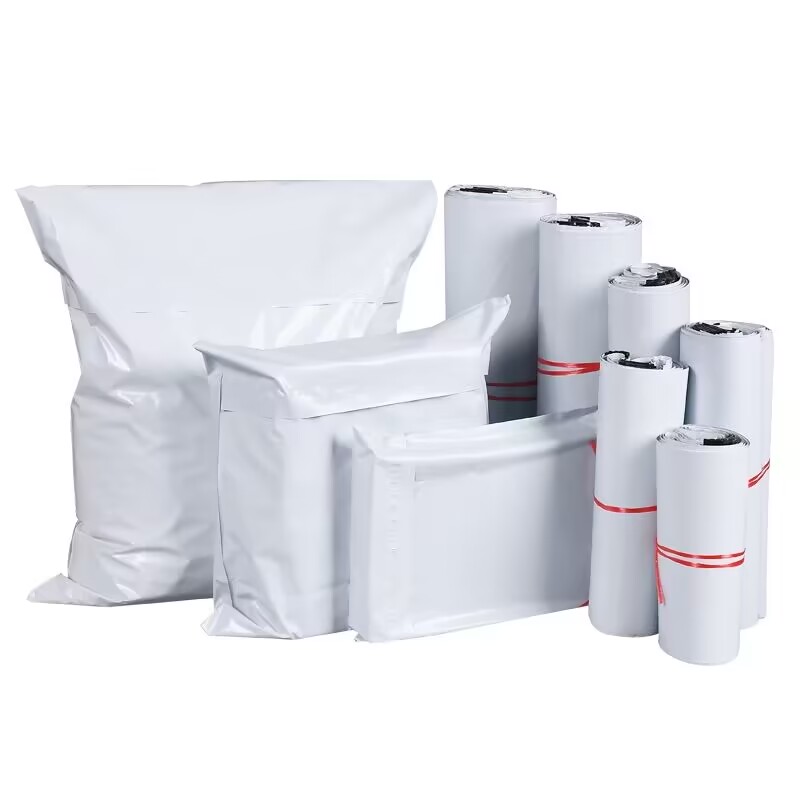
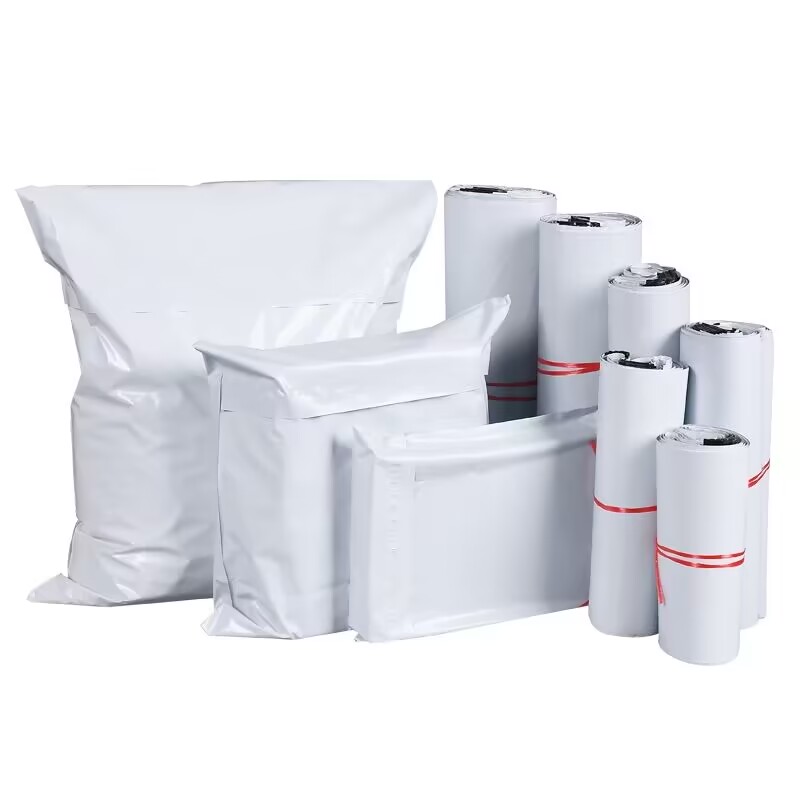
Black mailers perform well for branding and light sensitivity but are not universal solutions. White options—both plain and printable—offer benefits in barcode contrast, thermal reflectivity and easier visual inspection for tamper evidence; see also choices among white poly mailers and white plastic shipping bags for comparison. Lighter‑coloured films can reduce heat absorption in transit and improve automated scan rates, though they may require different ink systems for branding. In many cases a hybrid spec (black exterior layer with a white inner layer) balances aesthetics with operational visibility.
Common mistakes operators make—and quick mitigations
Three recurrent errors: selecting film solely on unit cost, neglecting seal‑side tolerances for closure hardware, and skipping integrated trials with actual packing equipment. A practical mitigation plan: insist on first‑article samples, run them through your exact adhesive and sealing jaws, and measure seal peel strength under the humidity range you expect in transit. —Small adjustments at that stage save entire batches later.
Testing checklist for procurement teams
Use this concise checklist to evaluate candidate black mailers before scaling:
- Mechanical: drop test and puncture resistance with pass/fail thresholds tied to your shipping profile.
- Seal: adhesive peel and shear strength at expected humidity and temperature extremes.
- Operational: conveyor abrasion and scanner contrast for label/readability performance.
Three golden rules for selecting the right poly mailer
1) Prioritise performance metrics over nominal thickness—compare tear resistance and seal strength rather than relying on micron ratings alone. 2) Demand integrated trials: run samples through your exact packing and sealing equipment for at least one full shift to reveal real handling stresses. 3) Take a total‑cost view: factor in rework, returns for damaged goods, and the cost of delays caused by inspection or repacking.
These rules are practical because they force decisions to align with measurable outcomes in the field—remember the surge of e‑commerce during the 2020 pandemic, which exposed how small material weaknesses cascade into major operational headaches for carriers and merchants alike.
Final advisory and where WH Packing fits
Use these three critical evaluation metrics when choosing a supplier: mechanical durability (abrasion and puncture resistance), seal reliability under expected environmental conditions, and real‑world scan/handling compatibility. Assess vendors on documented lab results and corroborating field trials—ask for sample runs that your team can process on‑site. In practice, that disciplined approach points you to suppliers who optimise co‑extrusion stacks and adhesive systems for your specific use case; naturally, aligning with a partner that publishes clear specs and supports trials—such as WH Packing—shortens your path to reliable performance.
Trust the data, test in situ, and choose partners who back their claims—expertise earns fewer surprises. —