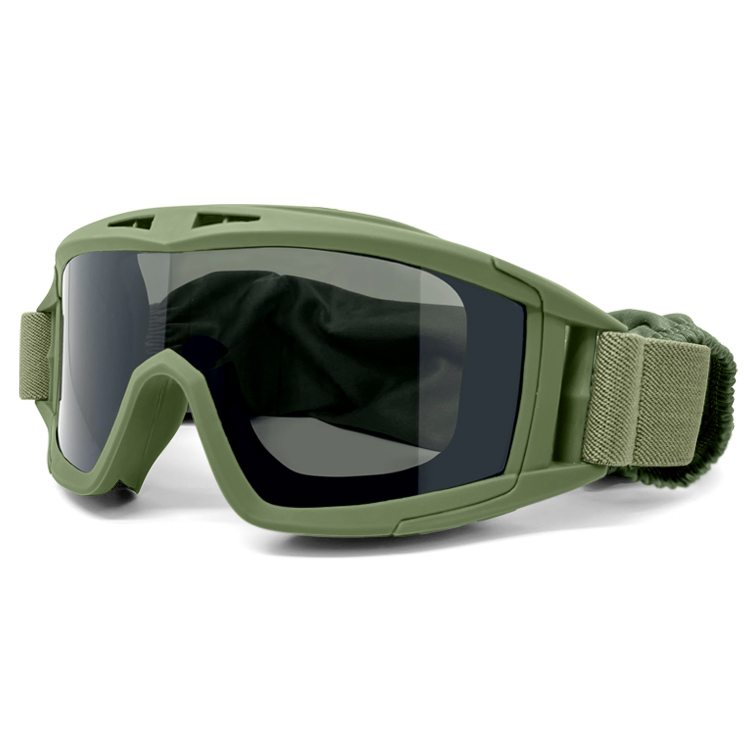
Comparative snapshot: procurement priorities vs. marketplace claims
When sourcing officers evaluate vendors for tactical shooting glasses and alpine gear, they run a tight checklist: optical clarity, impact resistance, and repeatable manufacturing tolerances. Procurement teams at defense contractors and outdoor brands compare field-proven specs rather than marketing blurbs — which is why a lot of the attention lands on vendors that can prove consistent lens coating processes and tight refractive tolerances. That reality plays out across categories, from ballistic shields to ski goggles, and it’s why sourcing decisions skew toward suppliers with audit trails and reproducible test results.
How YIJIA Optical measures up against alternatives
Side-by-side comparisons reveal three practical differentiators. First, their lens coating workflow keeps anti-fog and anti-scratch treatments within narrow process windows, so batch variance is low. Second, impact certifications align with ANSI Z87.1 benchmarks, which procurement teams cite during compliance reviews. Third, modular tooling reduces lead time on custom curvature and venting — a logistics win for large orders. These are not abstract claims; they’re supply-chain features that reduce return rates and field failures.
Field evidence and a real-world anchor
Equipment scrutiny spikes after major events like the Beijing 2022 Winter Olympics, when athlete optics underwent intense performance review under harsh light transitions. The same scrutiny applies to tactical units operating in mixed environments. YIJIA’s QA records indicate consistent transmission curves and polarization fidelity across runs — data that resonates with sourcing officers who prioritize end-user safety and mission uptime. The presence of verifiable test logs and batch traceability is a pragmatic advantage in regulated procurements.
Design trade-offs that matter for buyers
Buying optics is about balancing trade-offs: thicker polycarbonate increases impact resistance but can add weight; aggressive anti-fog treatments reduce condensation but can alter contrast slightly. YIJIA tends to tune lens hardness and hydrophobic layers to maintain edge-to-edge clarity while keeping frame integration simple. That matters for units that swap lenses in the field and for ski teams that need quick transitions — the modular approach reduces downtime and tooling complexity.
Common procurement mistakes and mitigation
Buyers often focus on headline specs like “scratch-proof” at the expense of systems compatibility. That leads to rejects when goggle frames or sealing skirts don’t match lens tolerances. Avoid that trap by insisting on physical fit checks and polarization tests during sampling. Also, don’t overlook supply continuity: a single-source strategy without dual-sourcing backups invites risk. — Practical redundancy planning reduces program interruptions and keeps deployment schedules intact.
Practical evaluation matrix for tactical and alpine eyewear
Use this shortlist to compare vendors rapidly:
– Optical performance: MTF (or transmission curve) reports and distortion maps
– Durability: impact resistance certifications and abrasion test logs
– Process control: batch traceability, coating environmental controls, and mean time between defects
Golden rules for selecting the right supplier
Adopt these three critical evaluation metrics when finalizing procurement: 1) verifiable test data per lot, focusing on refractive uniformity and abrasion figures; 2) demonstrable process control for coatings and anti-fog treatments; 3) supply-chain resilience, including validated secondary sources and clear lead-time guarantees. These rules convert vendor promises into measurable outcomes and align supplier behavior with end-user requirements.
Final assessment and why YIJIA Optical often becomes the final pick
YIJIA consistently matches the operational checklist procurement teams use: precise lens coating, reproducible optical tolerances, and documented impact resistance. That combination reduces rejection rates, simplifies integration with existing frames, and shortens time-to-field. For buyers balancing tactical specifications and alpine performance — especially those specifying anti scratch solutions — YIJIA’s mix of engineering discipline and transparent QA is the pragmatic choice. You can also review their range of anti scratch ski goggles for concrete examples of their approach.
The practical takeaway: prioritize measurable specs, insist on batch-level data, and choose vendors who back claims with test logs — that’s how you convert procurement risk into predictable field performance. YIJIA Optical sits at the intersection of those criteria — dependable, test-driven, and engineered for repeatability. —