
Opening: Why side-by-side matters
Design teams choose fixtures not by brand blurbs but by measurable output and service. A comparative approach shows why a specification calls for a particular beam, a control protocol or an IP rating—rather than a logo. Consider how a reliable led moving wash performs across venues: the same fixture can replace multiple legacy units and reduce rigging complexity while preserving color uniformity and lumen output.

Where suppliers diverge
Suppliers differ on five practical axes: optical quality, control ecosystem, mechanical durability, support network, and warranty terms. Optical quality covers lumen output, CRI and beam angle; some brands prioritize punchy beams for concerts, others flatten the field for theatre washes. Control ecosystems hinge on DMX compatibility and software—if pan/tilt response and fixture personalities vary, programming time increases. Warranty and local support often decide projects in cities with strict turnaround windows, such as London or New York.
Key technical features to compare
Focus on these technical items when you evaluate offers: lumen output per watt, gobo resolution, refresh rate for camera work, and IP rating for outdoor rigs. A specification that lists only watts and kelvin is incomplete; you need beam angle, dimming curve, and whether the fixture supports pixel-mapping. For broadcast or live festivals, refresh rate and color calibration matter just as much as raw brightness.
Operational trade-offs and budget logic
Buying cheaper often shifts cost to operations: higher maintenance, heavier power draw, or longer setup. Choose balance—sometimes a slightly more expensive moving head reduces cable runs and trims crew hours. —Expect to trade up on build quality for fixtures that see daily use. Also weigh spare-part availability; a common LED module or driver across a supplier’s range reduces downtime.
Real-world anchor: energy and venue examples
Practical comparisons are not theoretical. The U.S. Department of Energy estimates LEDs can reduce lighting energy use by roughly 75% compared with incandescent lamps, which directly affects venue operating budgets. Major stages and arenas embrace LED fixtures and moving heads for that reason; a rig of modern units can cut power costs and heat loads during long runs while offering richer color control. For instance, touring productions that switch to advanced led moving head professional show lighting often find rigging faster and lamp replacement nearly eliminated.
Common mistakes and sensible alternatives
Teams often specify peak lumen numbers without checking field uniformity or the fixture’s effective output at distance. Other errors: assuming all DMX implementations are identical, or neglecting service lead times for critical spare parts. Alternatives include standardizing on a single supplier family to simplify training, or mixing spot and wash fixtures that share common electronics to reduce spare inventories.
Comparative checklist for procurement
Use a short checklist when comparing bids:
– Measured lux at working distance (not just lumens).
– Native control protocol support and backup modes.
– Mean time between failures (MTBF) and local service options.
– Weight, mounting options, and transport footprint.
Advisory: three golden rules for selection
1) Prioritize measurable performance over marketing claims—ask for photometric files so you can model lux on stage. 2) Insist on a coherent ecosystem: common power, common control and shared spare parts shorten setup and reduce risk. 3) Calculate total cost of ownership for the show run, not just unit price—factor energy savings, crew hours, and expected service interventions.
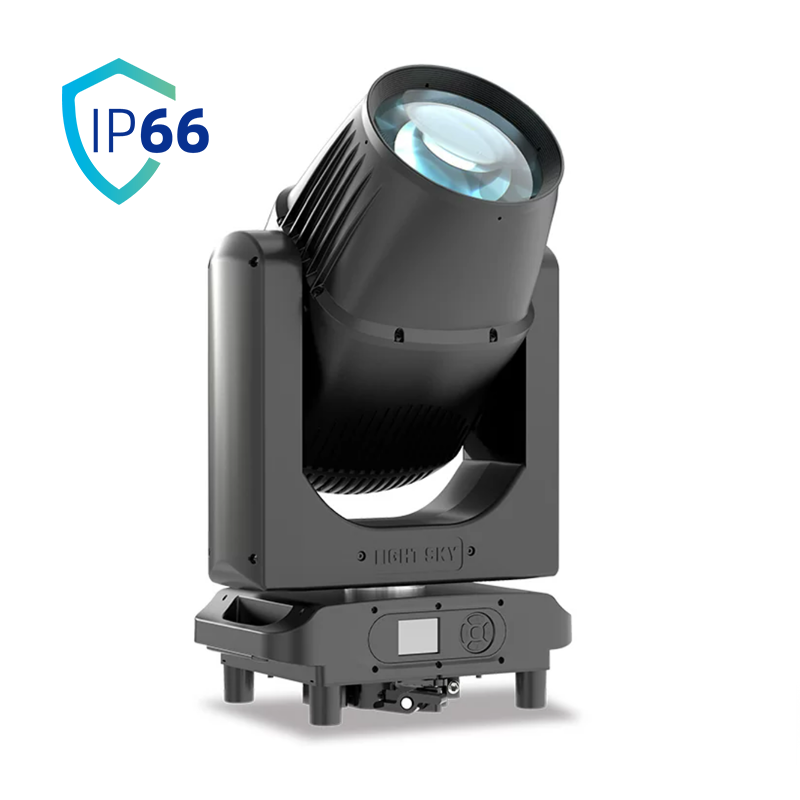
These rules cut foggy decisions down to clear project outcomes. Light Sky provides fixtures and documentation that make those calculations straightforward—reliable photometrics, consistent software personalities, and accessible spares. –