Introduction — scenario, data, question
Have you ever cut into acrylic at 2 a.m. and wondered where the smell went? Many small shops still treat fumes like a minor nuisance instead of a safety problem. The average hobbyist or small fabricator faces measured VOC spikes after just 20 minutes of laser cutting — and that is where a laser fume extractor becomes more than a box on the bench (yes, really).
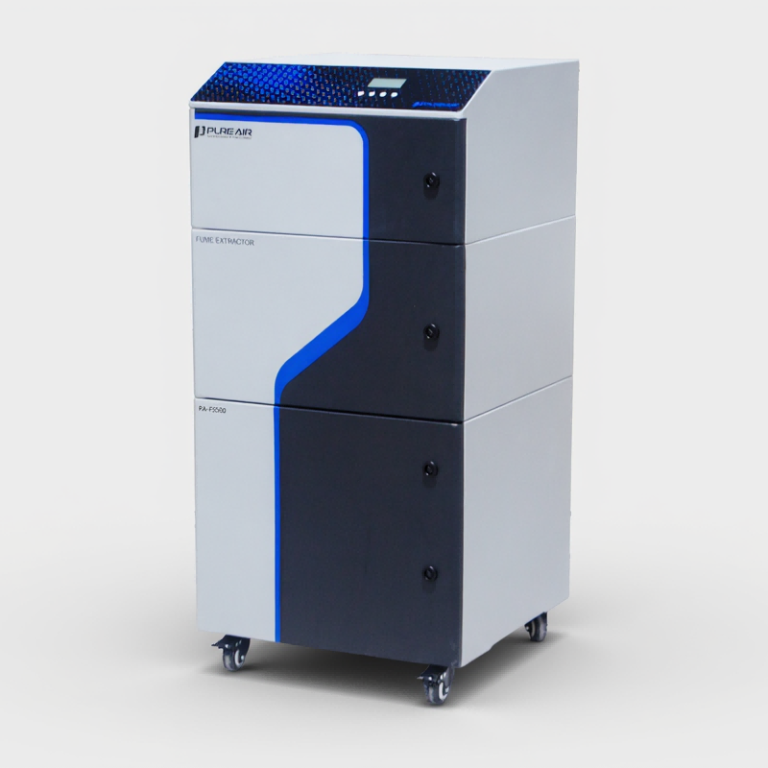
I say this from hands-on time in shops and workshops: proper extraction changes the daily rhythm. Workers report fewer headaches and clearer watches on throughput when filters and airflow are right. But here’s the question I keep asking: how do we pick a system that actually fits our workflow — not the other way around? This piece moves from that question into concrete faults you will see in traditional setups, then on to practical fixes and selection metrics. Read on — the next section gets technical fast.
Part 2 — Where standard setups break down (hidden pain points)
CO2 laser fume extractor is the phrase you will see on spec sheets, but the label alone hides a lot of limits. I’ve walked into dozens of workshops where people accept poor capture because “that’s how it’s always been.” In reality, many units fail on three fronts: inadequate airflow, poor filter staging, and bad placement. HEPA filters and activated carbon are useful words on a brochure, yes, but if the extractor’s CFM is too low or the intake sits behind the laser head, you still get fugitive emissions and charcoal that loads too fast. Look, it’s simpler than you think — solve capture first, then filtration.
I want to call out a few technical specifics so you can spot trouble. First, filter efficiency: some systems use thin carbon media that saturates quickly. Second, airflow rate: I’ve seen manufacturers list static CFM at ideal conditions — not the real-world duct losses. Third, maintenance access: if the operator avoids filter changes because the access is a hassle, performance drops over weeks. Use these signs to judge a real unit versus marketing talk. — funny how that works, right?
Why do these problems persist?
Because users trade convenience for safety. They accept noisy blowers, or they think a cheap inline fan will fix everything. I don’t blame them; budgets and space matter. But the result is recurring downtime, faster filter costs, and a compromised optical path on the laser head. Those are hidden costs that add up faster than you expect.
Part 3 — New principles and how to choose better
Moving forward, I focus on practical principles that change outcomes. Modern extraction is not just about stronger fans. It’s about matched systems: capture hoods or local nozzles matched to the laser head, staged filtration with replaceable HEPA/ULPA plus modular activated carbon, and real airflow measurement (not just a spec). A good system also monitors filter loading and has a clear maintenance schedule. I recommend looking for units with commanded CFM control and pressure sensors — those features keep performance steady as filters load. When you read a spec for a CO2 laser fume extractor, ask for measured capture velocity at the nozzle. That metric tells the real story.
What’s next? Integration with shop processes. New models add simple user interfaces and filter-life counters. Some systems even log operating hours and airflow — helpful for compliance and budgeting. I’ve worked with shops that reduced filter spend by 30% simply by tuning flow and using staged media. If you plan upgrades, think about duct routing, noise limits, and spare parts access. Short runs, smooth bends — these matter. — and yes, install an accessible pre-filter; it saves time, and you will thank me later.
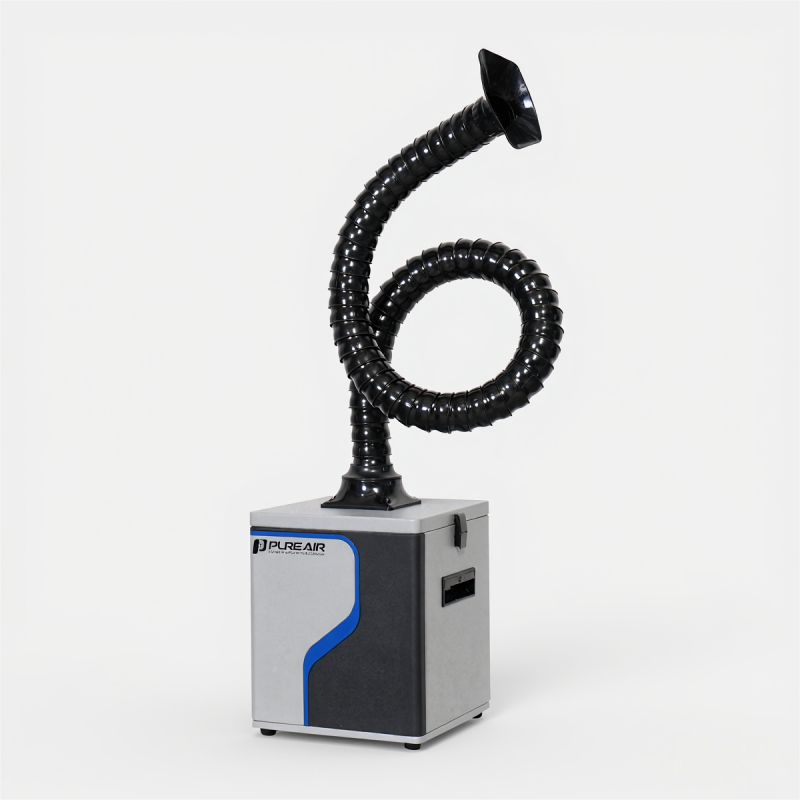
Three evaluation metrics I use
1. Capture velocity at the nozzle (measured, not calculated): Aim for consistent capture across materials. 2. Total system CFM with real duct runs: Ask vendors for tests done with your planned routing. 3. Filter staging and serviceability: Confirm filter types, life expectancy, and replacement ease.
In closing, I’ll be candid: picking an extractor is partly a technical choice and partly a human one. We choose tools we can maintain. We choose systems that match our work patterns. So when you compare units, focus less on marketing noise and more on measured capture, filter strategy, and how easily your team can keep it running. If you want a starting reference, I’ve found reliable options and spec guidance at PURE-AIR. We can make shop air a solved problem — not a tolerated one.