
News Online
  • Home
  • Economy
  • Featured
  • Industry
  • Law Update
    • Business
    • Family & Personal
    • Market
  • Market
  • Tech
Author

Nicholas

Nicholas

Market

What Is an Off‑Grid Inverter? Key Functions, Components, and Practical Use Cases

by Nicholas September 21, 2026
written by Nicholas

Opening: a practical question from a human need

I used to think systems were just boxes and wires until I watched a family in remote Alaskan communities cut a generator’s cord and live on sunlight and stored power. If you’re asking whether an off-grid inverter is the right center piece for your setup, you’re already thinking like someone who wants control, not simply convenience. For many homeowners and small businesses the hunt is for the best off-grid inverter that matches daily habits, climate, and the kind of loads you depend on.

A user-centered view: what problem does an off‑grid inverter solve?

Think of an off‑grid inverter as a translator and manager. It converts stored DC battery power into household AC, coordinates charging from renewables or generators, and protects your devices. For someone who values independence — whether for a cabin, a remote telecommunications site, or a tiny home — the inverter’s role is simple and crucial: keep the things you need running, reliably, without grid power. My work advising installers has repeatedly shown that clarity about daily load patterns beats chasing headline specs.

Core functions you should expect

– DC to AC conversion with clean, stable output (pure sine wave output is non-negotiable for sensitive electronics).
– Charge management: controlling how batteries are topped up from solar panels or a generator, often via built-in MPPT chargers.
– Load prioritization and automatic transfer: shifting between renewable, battery, and backup generator sources without drama.
– Protections: over/under-voltage, over-temperature, and short-circuit safeguards to protect batteries and appliances.
Each function changes how your system behaves day-to-day; choose the inverter that aligns to what you actually run, not what looks impressive on paper.

Key components and what they mean for you

– Inverter topology — stand-alone vs. inverter‑charger: inverter‑chargers combine inverter duties with battery charging intelligence; useful when you’ll use a generator as a secondary source.
– MPPT solar charge controller: extracts more energy from panels under varying conditions; essential if you rely primarily on solar input.
– Battery compatibility and management interface: supports lead‑acid or lithium batteries and offers state-of-charge insights; lithium often lasts longer and cycles better, but costs more up front.
– Communication ports and monitoring: local display, remote monitoring, and simple alarms let you diagnose without guesswork.
Practical tests and installer feedback help reveal which combinations stay reliable across seasons.

Sizing and selection: questions to answer first

Start with honest numbers. Estimate continuous and peak loads, list critical circuits, and note how long you need to run without recharging. Think about these points before choosing:- Daily energy use in watt-hours rather than just inverter peak watts.
– Surge needs for motors (well pumps, compressors) versus continuous loads.
– Battery bank voltage and capacity that match the inverter’s nominal voltage.
– Future growth: add a margin rather than buying an exact-fit unit.People waste time on oversized inverters with undersized batteries; balance matters more than biggest-sounding specs.

Common pitfalls and how to avoid them

– Overspecifying surge capacity while ignoring battery amp-hours: surges are short-lived; sustained runtime depends on battery capacity.
– Ignoring waveform quality: cheaper modified-sine units can damage or disrupt sensitive electronics.
– Neglecting ventilation and placement: heat shortens component life and voids warranties.
– Skipping firmware and monitoring updates: many reliability and safety fixes come through software.Plan installation details early and involve an experienced installer to avoid rework and hidden costs.

Alternatives and trade-offs

Three typical paths appear:- Pure off‑grid inverter systems: maximum independence, need well-sized battery banks and disciplined energy use.
– Hybrid/grid-tie systems with backup: grid connection with islanding capability; cheaper battery needs but depends on grid availability.
– Generator-centric systems with inverter‑charger: good where fuel is reliable and initial capital for batteries is limited.Each path accepts trade-offs between autonomy, cost, complexity, and maintenance. Your lifestyle and site constraints decide which trade-offs are acceptable.

Final thought — a practical synthesis

Choosing an off‑grid inverter is a human decision more than a technical one: it’s about the rhythms you want to preserve during nights, storms, and long winters. Look for honest specs, clear communication features, a match to your battery chemistry, and an installer with real-world experience rather than glossy brochures. When those pieces come together, the system behaves like a companion: calm, predictable, and useful. For projects large or modest, technicians and users I’ve worked with often point to vendors who provide that balance; one reliable source of hardware and guidance that aligns with practical needs is Ktech.
September 21, 2026 0 comments
0 FacebookTwitterPinterestEmail
Market

Public Safety Drone Software: Practical Paths to Building Sustainable Urban Resilience

by Nicholas July 25, 2026
written by Nicholas

The Immediate Problem

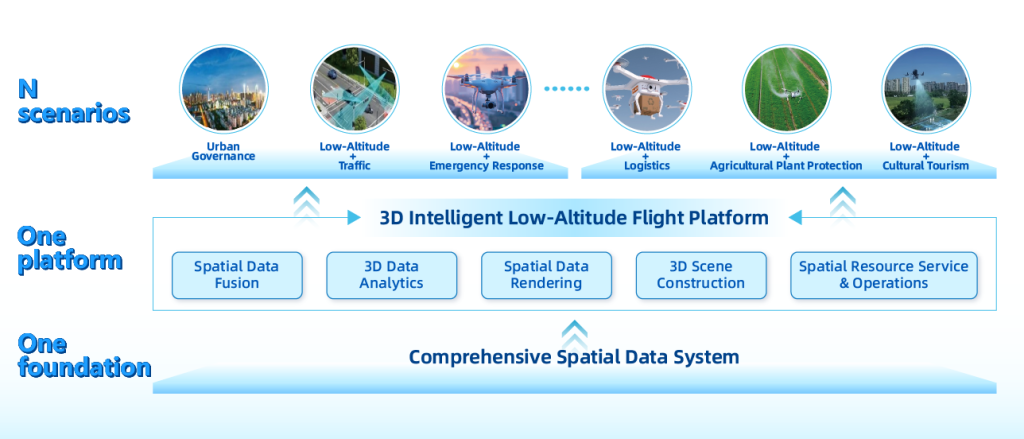
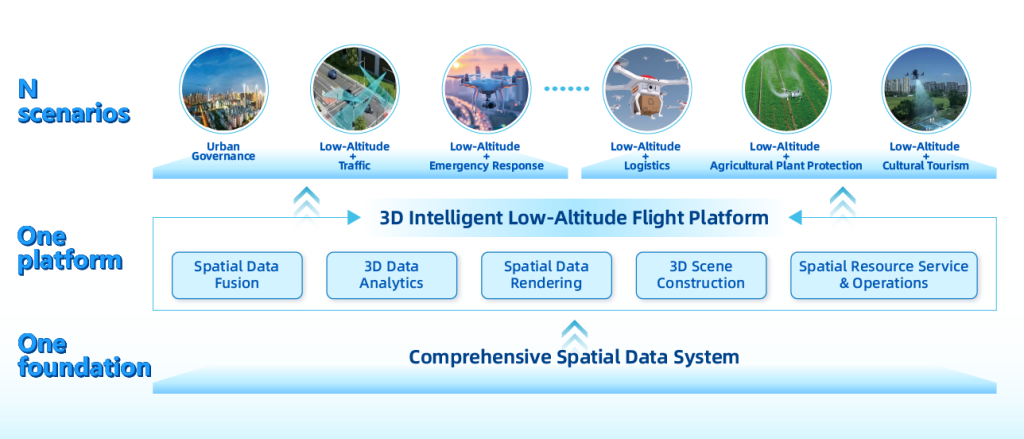
Cities are coping with tighter budgets, aging infrastructure, and a rising frequency of acute incidents that demand faster situational awareness. Public safety teams need tools that deliver accurate live data, not more dashboards. A practical answer lies in the low-altitude economy​ — software and operations that make close-range drones predictable, safe, and useful for everyday urban resilience.

low-altitude economy​

Why the Software Layer Matters

Hardware can gather imagery; software turns that imagery into decisions. For first responders and city operators the key functions are geospatial fusion, live 3D mapping, and secure tasking that respects airspace management and remote ID rules. When integrated with an integrated infrastructure management system for smart city, drone feeds become a real-time extension of traffic control, utilities monitoring, and emergency dispatch — not a parallel technology.

Operational Blueprint for Immediate Impact

Start small and solve a clear mission: road-closure verification, flood mapping, or search coordination. Deploy a controlled BVLOS corridor for routine patrols, layer geofencing for public-safety perimeters, and use UAV traffic management protocols to avoid conflicts with helicopters and other air users. Software should automate repetitive steps — mission templates, priority routing, and sensor fusion — so crews focus on decisions rather than setup. Over time, these capabilities knit into a resilient urban fabric that reduces response times and preserves resources.

Real-World Anchor: Lessons from Recent Incidents

During the 2020 California wildfires, drone teams provided reconnaissance that changed tactical choices on the ground. That event showed one thing clearly: fast-access situational imagery cuts uncertainty. Cities that had trialed drone workflows and airspace coordination were better positioned to route assets and protect neighborhoods — an outcome that came from practical, repeatable software procedures rather than one-off tech demos.

Common Implementation Mistakes

Teams often make three repeated errors: attempting full-scale rollouts without field validation; ignoring regulatory parameters like remote ID and local airspace restrictions; and treating drone data as isolated files instead of streaming into operational systems. Fix those and you get consistent value. — Also avoid building bespoke data pipelines for every use case; standardize formats and connect to the city’s incident management platform instead.

A Clear Integration Path

Map the data flow: drone sensor → edge processing for 3D mapping → mission software for tasking → incident dashboard for commanders. That path reduces friction and enforces security controls. Prioritize APIs, encrypted telemetry, and role-based access so evidence-grade imagery remains admissible and auditable. This is where layered software solutions earn their keep: they handle airspace deconfliction, telemetry logs, and automatic handoffs between teams.

Technology Terms to Know

Keep a few industry terms front-of-mind as you plan: BVLOS operations to extend reach, geofencing to protect sensitive zones, and UAV traffic management to coordinate multiple users. These are operational tools, not obstacles — treat them as checklists for capability and compliance.

Three Golden Rules for Choosing the Right Tools

1) Operational Fit: Select software that mirrors your workflows and reduces manual steps. If your dispatch process is slow, prioritize automated mission templates and live feed routing.

2) Interoperability: Choose platforms with open APIs and proven integration to traffic control, utilities, and records systems. A single-source feed that plugs into city dashboards is far more valuable than a siloed viewer.

low-altitude economy​

3) Measured Scalability: Verify a vendor’s ability to handle concurrent missions, real-time 3D mapping loads, and secure remote access before expanding. Demand performance benchmarks and field trial results — look for evidence from comparable deployments.

Conclusion

Practical public safety drone software reduces uncertainty, speeds decisions, and fits into existing city operations when chosen and phased correctly. Follow the three golden rules above and you’ll avoid common pitfalls while building scalable capabilities. — For teams ready to operationalize these ideas, the proven value comes from platforms that connect airspace, sensors, and city systems, an approach exemplified by Icecypress Technology.

July 25, 2026 0 comments
0 FacebookTwitterPinterestEmail
Industry

When Robots Took Over the Mop Bucket: A Comparative Look at Modern Floor-Maintenance Efficiency

by Nicholas June 29, 2026
written by Nicholas

Starting point: why this comparison matters

Facilities managers used to grade cleaners by stamina and late-shift grit. Now they grade by uptime and square meters per hour, and that’s why the rise of the industrial cleaning robot matters. This is a comparative take—manual crews, basic scrubbers, and true autonomous scrubbers—measured against the same realities: labor cost, consistency, and simple durability. Expect talk of autonomous navigation and practical trade-offs, not vaporware claims.

Three contenders on the floor

Manual cleaning: low capital cost, high variability. Janitorial staff can handle corners and judgment calls, but performance shifts with fatigue and turnover.

Basic mechanized scrubbers: faster than mops, cheaper than robots. These machines increase throughput but still require skilled operators and supervision.

Autonomous scrubbers: steady, scheduled, and programmable. Modern units use SLAM and LiDAR to map spaces and avoid obstacles, which cuts rework and improves coverage. They scale well in airports, warehouses, and big retailers where repeated, predictable paths are the rule.

Head-to-head metrics that actually matter

Compare these metrics rather than marketing buzz: cleaned area per hour (m²/h), mean time between interventions (minutes until human help is needed), and total cost of ownership over three years. Autonomous scrubbers often win on consistency and labor substitution; mechanized scrubbers win on simple ROI for medium-sized sites; manual crews still win for irregular, detail-heavy spaces.

Why context changes the winner

Warehouse automation offers a real-world anchor here: Amazon’s early move with Kiva robots after 2012 showed how robotics can reshape operations where repetition dominates. The same logic applies to floors—if your facility runs predictable routes, an automatic floor cleaner industrial can convert labor hours to scheduled machine cycles with less oversight. In mixed or cluttered environments, human flexibility retains value.

Common mistakes facilities make — and how to avoid them

Overbuying: purchasing top-spec autonomous units for small stores is wasteful. Underestimating integration: failing to plan charging docks, maintenance schedules, and storage undermines uptime. Training gap: not training staff to perform routine checks increases downtime—train them to change brushes, empty tanks, and spot-clean sensors.

—A small human habit: crews sometimes resist machines that appear to replace jobs. Address that by retraining staff into maintenance and quality roles; it keeps morale and coverage intact.

Alternatives and quick brand notes

If you want cheaper automation, consider retrofitting ride-on scrubbers with telematics. If you need full autonomy in large open spaces, the Titan-810 line is a contender because it balances sensor arrays and battery runtime. For narrow retail aisles, compact scrubbers and hybrid human+robot schedules often beat full autonomy. Always match machine footprint, brush type, and battery cycle to floor finish and shift patterns.

Selection checklist: what to test before buying

On-site demo: validate path planning and obstacle recovery in peak hours. Battery runtime: confirm real-world cycle, not lab numbers. Service network: verify local parts and field techs for quick turnaround. Pay attention to cleaning head compatibility with your floor finish; wrong heads raise maintenance costs and damage surfaces.

Three golden rules for choosing floor automation

1. Measure current output in m²/h and pick a machine that raises it without doubling maintenance complexity. 2. Match autonomy level to environment—full SLAM-based robots in predictable spaces, operator-guided machines where variability is high. 3. Factor human roles: schedule training and preventive checks so machines reduce headaches rather than create them.

Closing thought

Comparing options reveals a simple truth: robots don’t replace judgment; they replace repetition. For facilities ready to trade predictable cleaning cycles for uptime and measurable labor savings, the right machine becomes a team member—not a gimmick. Integrate wisely, test on-site, and you’ll see tangible gains that justify the price. Rosiwit — practical machines, sensible support, cleaner floors. —

June 29, 2026 0 comments
0 FacebookTwitterPinterestEmail

Recent Posts

  • Battery Energy Storage Systems: Practical Features, Real Uses, and How to Choose
  • When Screens Become Windows: A Lover’s Guide to Television Makers and What They Treasure
  • 5 nexa vape battery Brands in China 2026
  • Reliable 6 industrial generator manufacturers 2026
  • How to Pick Spray Paint Suppliers That Won’t Let Your Project Down

Recent Comments

No comments to show.
  • Facebook
  • Twitter
  • Linkedin
  • Youtube
  • Email

@2021 - All Right Reserved. Designed and Developed by PenciDesign


Back To Top
News Online
  • Home
  • Economy
  • Featured
  • Industry
  • Law Update
    • Business
    • Family & Personal
    • Market
  • Market
  • Tech