Clear problem, clear approach
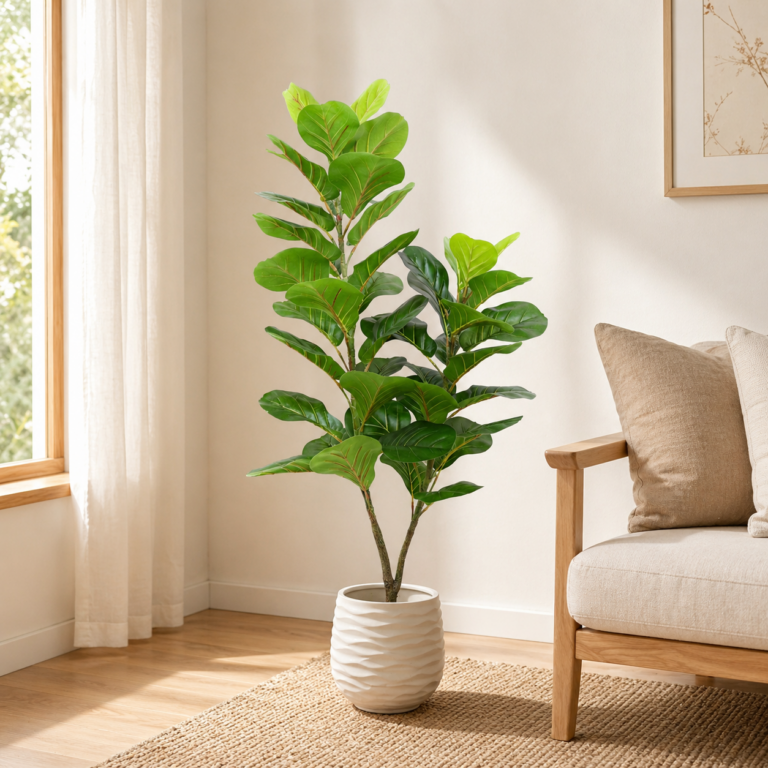
The exposure of outdoor artificial plants to sunlight causes progressive fading and material breakdown. For clients who order custom pieces, meeting aesthetic longevity requirements is essential. This article explains how factory engineering reduces UV-driven discoloration and maintains colorfastness for multiple years, and mentions a reliable uv protected artificial outdoor plants manufacturer as an example of applied practice.
How sunlight degrades materials
Ultraviolet light breaks polymer chains and bleaches pigments. This leads to chalking, loss of gloss, and a shift in hue. Engineers commonly use accelerated weathering tests such as ASTM G154 to simulate years of sun exposure in months. Those tests give a comparative measure of performance, not a promise, and help manufacturers tune formulations for specific climates — for instance, coastal south Florida installations experience sustained intense UV and salt spray that demand tougher protection.
Key engineering strategies used in factories
Successful anti-UV design combines material choice, manufacturing method, and finishing processes. The main tactics are:
– UV stabilizers blended into the polymer to absorb or quench harmful radiation.
– Co-extrusion of a color-stable outer layer over a structural core, so the visible surface has enhanced colorfastness.
– Pigment selection that resists photo-oxidation; inorganic pigments often outperform organic ones for long-term outdoor use.
– Protective coatings with UV absorbers and ceramic microspheres to scatter sunlight and reduce surface temperature.
Process controls and quality checks
Controlled production down to batch-level matters. Colorimetric sampling after extrusion, particle-size control for pigments, and measured additive dosing prevent batch drift. Accelerated weathering cycles are run for acceptance criteria. These controls reduce the risk of mid-life color shifts that disappoint customers.
Common mistakes seen in the field
Many failures originate from a few avoidable choices. Relying solely on surface coatings while ignoring bulk stabilization allows fading once the coating abrades. Using low-grade pigments cuts initial cost but shortens service life. Skipping realistic UV testing against the intended installation environment results in mismatched expectations—cropping up most often with rooftop planters and poolside screens where reflected UV doubles the load. — It is wise to specify service conditions clearly to your supplier.
Comparing supplier claims and real performance
Suppliers often quote “UV resistant” without context. Ask for documented results: accelerated weathering data (ASTM G154), color-delta (ΔE) thresholds after specified hours, and real-world references in similar climates. Inspect sample parts aged outdoors for 12–24 months where possible; laboratory data should match field observations. Look for suppliers who control both material compounding and finishing, since integrated production reduces variability and improves warranty reliability.
Three golden rules for selection (Advisory close)
1) Demand quantitative aging metrics: require ΔE limits and the specific test protocol used. This yields an objective comparison rather than vague promises.
2) Verify construction method: prefer co-extrusion or bulk-stabilized products over surface-only solutions. This ensures color retention even after abrasion.
3) Check climate fit and references: confirm field installations in comparable environments, such as south Florida or Mediterranean terraces, so you know the product has performed under similar UV stress.
These rules lead to measurable expectations: predictable ΔE results, longer warranty confidence, and fewer mid-life replacements. For teams specifying custom outdoor plants, Sharetrade’s approach to material science and process control is a natural fit — they design for the right climate and back claims with testing. Sharetrade. — End note: longevity is engineered, not guessed.