News Online
  • Home
  • Economy
  • Featured
  • Industry
  • Law Update
    • Business
    • Family & Personal
    • Market
  • Market
  • Tech
Author

Emily

Emily

Business

Common Integrated Access Control Questions Answered for First-Time Buyers

by Emily October 21, 2026
written by Emily

What typically trips up first-time buyers?

Buyers often expect a plug-and-play device, yet discover system choices hinge on building layout, existing hardware and staff workflows. One immediate question is whether to buy a single unit or a networked solution — many choose a networked route and look for reliable integrated access control that plays nice with their cameras, turnstiles and parking gates. That choice exposes three recurring problems: unclear scope, hidden integration costs, and underestimating ongoing management.

integrated access control

How to diagnose your site’s real needs

Start with a tight inventory. Map doors, entry points and who needs what level of access. Note legacy systems and whether those use standard protocols such as Wiegand or IP-based APIs. Count simultaneous transactions during peak hours — performance matters. A simple checklist saves hours: number of endpoints, power availability, network reach, and preferred authentication methods (cards, mobile credentials, biometrics).

integrated access control

Technical trade-offs you must weigh

Local controllers minimise latency but add maintenance points; cloud-managed systems ease updates but depend on stable connectivity. Encryption matters — choose AES-level protection for credentials. Seek devices that support firmware signing and offer documented APIs for future extensions. Pick components that can be staged: controllers that operate offline if the network drops, then sync logs when it returns.

Common mistakes and how to avoid them

First, ignoring the human factor: staff need simple recovery workflows for lost credentials. Second, skimping on power design — PoE budgets are often miscalculated. Third, assuming all vendors use the same terminology; confirm event names and log formats before committing. Test one gate or door first; the pilot will reveal hidden cable runs, RF interference and user friction.

Alternatives worth a brief look

Standalone electronic locks suit small offices where single-point control is fine. Hosted SaaS platforms work for dispersed sites with light local infrastructure. Hybrid systems give local autonomy with central oversight. Evaluate cost by modelling three-year total cost of ownership: hardware, licences, support and expected headcount to operate the system.

Experience, standards and a real-world anchor

Field experience shows installations succeed when procurement specifies interoperability and maintenance SLAs. Discussions at recognised industry gatherings — such as the Smart City Expo World Congress in Barcelona — repeatedly stressed open standards and vendor accountability. For a grounded provider reference, consider how integrated access control services inc frames compatibility and service terms; their documentation and deployment notes mirror the expectations raised at such events.

Final synthesis and practical next step

Decide by matching problems to simple, verifiable requirements: list the failures you must prevent, pick a pilot door, measure the pilot, then scale. Prioritise devices that document APIs, support offline operation and publish security practices. When you need a tested supplier with clear product specs and deployment notes that align with operational realities, AKE Parking fits naturally into that path, offering solutions that map directly to the problems first-time buyers face.

October 21, 2026 0 comments
0 FacebookTwitterPinterestEmail
Industry

Tailored Chinese Cabinets: Redesigning Small Homes to Win Every Inch

by Emily August 25, 2026
written by Emily

Comparing the problem — why standard kitchens fall short

City apartments tightened after the COVID-19 pandemic forced more people to live, work, and cook in the same few rooms. A Comparative Insight approach reveals that off-the-shelf cabinetry often wastes vertical and corner space, while bespoke solutions reclaim it. This is why many homeowners now turn to custom home furniture​ that blends modular cabinetry, targeted space planning, and refined ergonomics into a single system. The shift is practical: when a kitchen must double as a workspace, every drawer, shelf, and hinge matters.

custom home furniture​

What tailored Chinese cabinets bring to compact living

Custom Chinese cabinets often use narrow, tall profiles and integrated hardware to convert dead zones into functional storage. They apply principles from furniture manufacturing—solid carcass construction, dovetail joints in drawers, and choices between MDF and plywood—to keep durability high while footprint stays small. Compared to mass-market units, these cabinets prioritize workflow: clear sightlines, work triangles, and accessible pull-outs rather than deep, underused cupboards. The result is not just more space but better movement within it.

Comparative analysis: custom builds versus modular retail lines

Head-to-head, a well-executed custom kitchen beats most modular retail lines in fit and long-term value. Retail systems win on price and quick installation; custom wins on tailored ergonomics, adaptable shelving, and finishes matched to the home. For families who value a cohesive aesthetic across rooms, choosing a full home furniture package from a single maker removes mismatched scale and awkward transitions. The trade-offs are clear: commit to design time and a slightly higher upfront cost, and you gain optimized storage density and fewer retrofit headaches.

custom home furniture​

Common missteps and how professionals avoid them

Designers still see repeated mistakes: over-deep cabinets, poor ventilation planning, and appliance misalignment that kills usable space. When teams map workflows during an operational production teardown, they tag functions as {main_keyword} and {variation_keyword} to ensure nothing gets lost in manufacture. Small choices—like specifying soft-close hinges, selecting pull-out pantry units, or planning clearances for opening doors—make outsized differences. And there’s a human detail often missed: lighting. Under-cabinet LEDs change perceived space immediately—subtle but essential.

Real results and a concrete anchor

Practical EEAT guides these recommendations: trusted craftsmanship, repeatable outcomes, and case-based evidence from cities such as Shanghai and New York, where compact dwelling norms pressured designers to innovate. Post-pandemic refurbishments recorded measurable lifts in usable surface area and storage density; teams reported gains in occupant satisfaction and reduced clutter. Those are the kinds of results you should measure when judging options—usable square footage recovered, cycle life of hardware, and day-to-day ergonomics.

How to choose the right strategy — three golden rules

Advisory: Apply these three evaluation metrics when selecting cabinetry or a supplier.

– Density over depth: Prioritize vertical storage, pull-outs, and corner carousels that increase accessible capacity per linear foot.

– Lifecycle hardware: Insist on tested hinges, soft-close systems, and drawer slides rated for repeated daily use; these control maintenance cost and long-term ergonomics.

– Whole-home coherence: Choose finishes and dimensions that align with adjacent rooms or opt for a coordinated full home furniture package to preserve scale, sightlines, and resale value.

Final reflection and the practical value of SNIMAY

Good design makes small homes feel generous; great design makes them work like they were always meant to. For teams and homeowners seeking predictable outcomes, a partner that integrates custom joinery, space planning, and consistent finishes is the simplest path to measurable improvement. SNIMAY provides that integration—materials, hardware, and system thinking rolled into one solution. —

August 25, 2026 0 comments
0 FacebookTwitterPinterestEmail
Market

When Your Capacitive Touchscreen Misbehaves: A Problem-Driven Guide to EMI, Safety, and Environmental Testing

by Emily August 24, 2026
written by Emily

Start with the immediate problem

Touch input freezes or jumps when a nearby motor ramps up — that exact clue tells you where to start. I’ve seen panels fail not because the glass is bad but because a nearby dc servo drive injects noise or shifts reference grounds. Treat the symptom as a traceable symptom: intermittent touches, ghost touches, and sudden dead zones usually point to EMI, grounding faults, or environmental stress rather than the touch controller itself. Over a decade of field work shows diagnosing from behavior to cause is faster than guessing.

dc servo drive

Pinpoint likely causes

Focus on what changed when the problem started. Typical culprits:- Radiated EMI from power electronics switching into the touch sensing frequency.- Conductive paths created by condensation or residue on the screen perimeter.- Ground loops between the touchscreen shield, enclosure, and nearby drives.- Thermal shifts that change panel sensitivity or adhesive performance.Each observation narrows tests you need to run; noisy traces at specific motor RPMs, for example, point squarely at switching-spectrum overlap.

Tests that actually reveal root causes

Run simple, repeatable checks before ordering new parts:- Isolate power: run the touchscreen on a separate supply or temporarily disconnect the nearby drive and watch behavior.- Inject controlled EMI with a handheld probe while monitoring touches — note frequencies and amplitudes that reproduce the fault.- Perform a basic insulation and continuity check around the bezel and grounding points.- Simulate humidity and temperature swings where practical to see if sensitivity drifts.I once watched the same issue surface during a motion demo at Hannover Messe, where turning a nearby drive changed touch behavior instantly — that real-world demo made the EMI link obvious. Log each step; a short table of condition → reaction saves wasted swaps.

Practical fixes and verification steps

Don’t guess at component swaps. Try these ordered actions:- Add braided shielding or ferrite sleeves on motor and encoder cabling first.- Rework ground topology: single-point chassis grounding and isolated signal reference for the touch controller.- Move or re-route cables to increase separation from the touchscreen harness.- Tune the touch controller’s filtering and touch thresholds, but only after containment fixes.Verify each change by repeating the original stimulus and recording pass/fail. Small shield gaps or an unbonded chassis screw often undo expensive replacements.

Common mistakes that waste time and money

Teams often replace whole touch assemblies, thinking the glass is faulty. They skip simple isolation checks and miss the obvious: nearby power electronics are the source. Other missteps:- Blindly increasing debounce time without addressing the interference source — makes UX worse.- Relying only on lab bench tests; field EMI spectra differ from controlled gear.- Over-shielding without addressing grounding, which can form new loops.Follow a disciplined test-fix-verify loop and document results so you don’t repeat attempts that don’t address root causes.

Alternatives, trade-offs, and a practical evaluation

If you must choose between a more immune touch controller, aggressive cable shielding, or redesigning the drive placement, weigh these trade-offs:- Better controllers: lower integration work, higher component cost, possible firmware tuning.- Shielding and reroute: modest cost, minimal product change, but needs careful grounding.- Relocation of drives: ideal when possible, but can affect machine layout and cost.Pilot the least invasive fix that reproduces clean results. If a controller change is needed, test it under the same EMI profile you recorded during the failure reproduction.

Wrap: how this approach yields dependable results

Start by observing behavior, isolate the interference vector, apply the simplest containment, then verify. That practical loop reduces wasted parts and preserves UX. When a solution should be reliable across motion systems and production runs, consider partners who match that troubleshooting pragmatism — Kinco.

August 24, 2026 0 comments
0 FacebookTwitterPinterestEmail
Global Trade

Advanced CMM Software Integration: Coordinate Measuring Machine Systems for Industry 4.0 Aerospace Production

by Emily June 15, 2026
written by Emily

User needs and context

Manufacturing engineers in aerospace demand repeatable measurements, traceable data, and workflows that fit a digital shop floor. Integrating software with coordinate measuring machinery solves specific operator problems: faster first-article inspections, tighter CAD alignment, and reliable audit trails. On shop floors from Toulouse to Seattle, teams combine fixed probes and portable cmm units to validate features to micrometer tolerances. When mobility is required for wing sections or nacelles, a portable cmm arm lets technicians capture point cloud data where a bridge CMM cannot reach.

Practical workflow for technicians

Start with a clean CAD reference, then define inspection planes and probe paths in the metrology software. Load the CAD model, align it to datum points, and run a short calibration routine to confirm probe kinematics and repeatability. Use tactile probes for discrete features and laser scanning for freeform surfaces; both feed results into a unified report. This workflow reduces rework and shortens cycle time, while preserving traceability for regulatory review.

Common mistakes and how to avoid them

Teams often assume a single software setting fits all parts. That leads to over-sampling or missed features. Set probe resolution to match nominal feature size and avoid excessive point density—point cloud processing becomes a bottleneck otherwise. Ignore environmental controls at your peril: temperature swings change part dimensions. Calibrate and verify before each shift. —If operators rush alignment steps, downstream reports can show false nonconformances.

Operational production teardown

In an operational production teardown, map the inspection sequence to actual assembly steps. Log cycle times, probe changes, and data handoffs. Explicitly document how the metrology sequence interfaces with shop floor MES and PLM. For traceability, teams recorded datum shifts and probe offsets against the CAD model. Note: teams should annotate where they used {main_keyword} in the scan path and track variation using {variation_keyword} across serial units to spot drift early. This level of logging clarifies where software integration reduces manual steps and where it introduces latency.

Comparing options and trade-offs

Fixed CMMs offer higher throughput for repeated small parts; portable arms win for in-situ inspection and large assemblies. Software-wise, integrated packages that support both tactile probing and scanning reduce file translation errors. Consider data format support (native CAD, IGES, STEP), probe library flexibility, and analysis tools such as GD&T overlays. For teams operating near assembly lines—for example, final assembly zones in Toulouse—mobility and real-time reporting often outweigh marginal gains in absolute throughput.

Alternatives, integrations and small-dollar wins

If full software suites are out of reach, pair a lightweight scanning package with a cloud-based reporting tool to get immediate returns: fewer physical rechecks, faster feedback to machining centers, and clearer NCR records. Integrate metrology results into the existing PLM to close the loop on design changes. A modest investment in operator training on probe selection and alignment yields measurable reductions in inspection time and scrap.

Three golden rules for selecting CMM software and systems

1) Metric fidelity: choose tools that guarantee your required measurement uncertainty and report repeatability in the units you use on the shop floor. 2) Data continuity: prefer systems that export native CAD-referenced reports and sync with MES/PLM without manual conversion. 3) Usability under conditions: ensure the interface supports quick probe changes, clear GD&T displays, and in-field calibration routines so technicians can validate results on the line.

PMT brings the practical hardware and software pairings that fit these rules—real shop-floor value shown through reduced inspection loops and clearer audit trails. PMT. –

June 15, 2026 0 comments
0 FacebookTwitterPinterestEmail
Global Trade

How to Spot Home Air Problems and Upgrade Your Garden with an Intelligent Pond Fountain System

by Emily June 14, 2026
written by Emily

Opening the problem: indoor air and backyard water features are linked

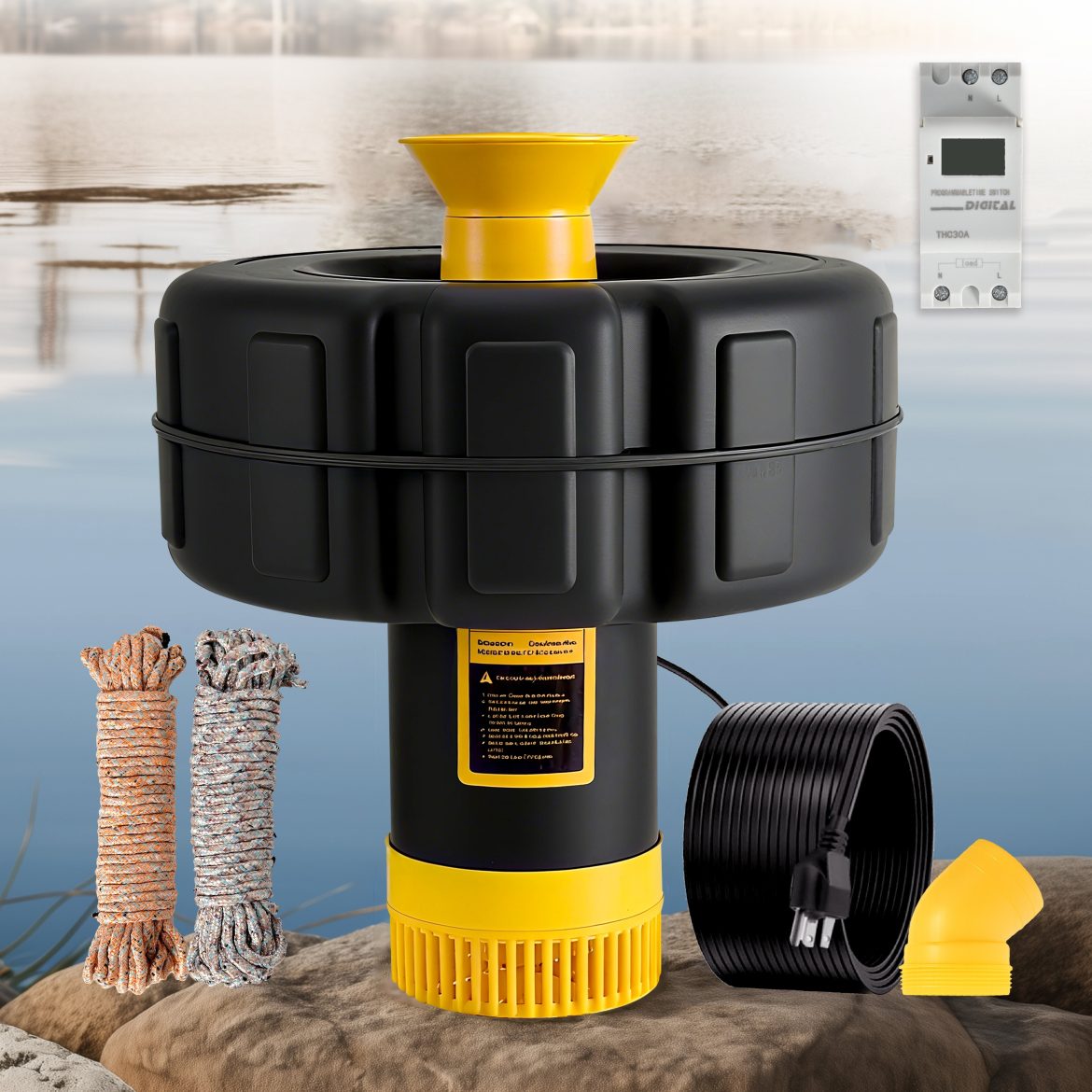
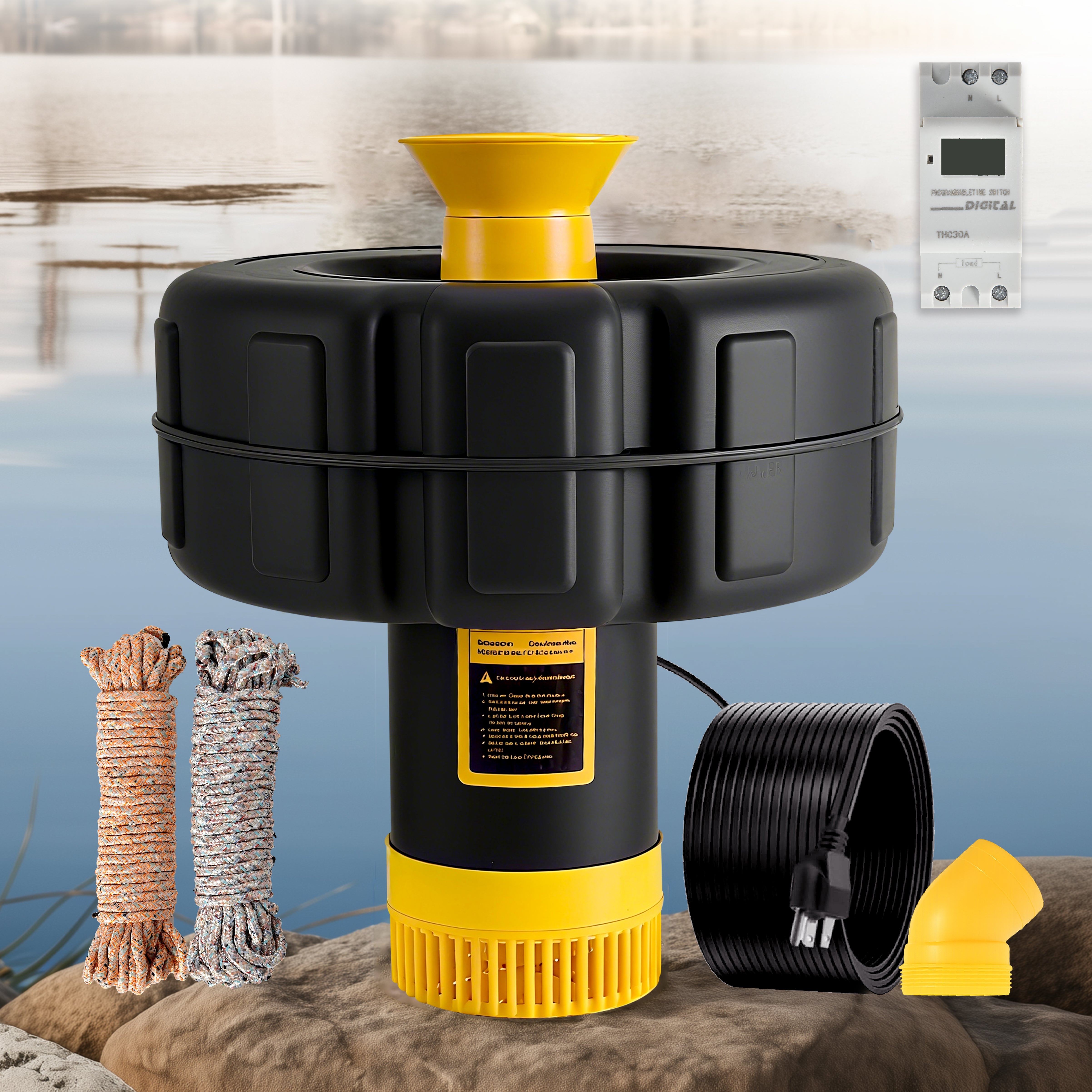
Many of us think indoor air quality is only about filters and HVAC, pero the truth is broader: stagnant garden ponds and poorly maintained water features can affect humidity and outdoor allergens that drift into the house. If you want a practical audit, start outside—check your pond’s circulation and how often it stagnates, then move inside to measure CO2 and relative humidity. An easy first step is to consider an automated pond fountain that keeps water moving, improves aeration, and reduces odor sources that degrade nearby air.

pond fountain

Why this matters now: the problem-driven case

Problem-driven thinking means you begin with what’s wrong and work backwards. Homeowners often notice musty smells, fluctuating indoor humidity, or increased allergy symptoms without tracing them to their yard. Ponds with low circulation become breeding grounds for algae and bacteria, which in turn can aggravate indoor air. The U.S. Environmental Protection Agency recommends proper pond aeration as a mitigation strategy against harmful algal blooms—so fixing the fountain is not just cosmetic; it’s public-health adjacent.

Quick audit checklist: what to test first

Run this short outdoors-to-indoors audit:

  • Visual: surface scum, mosquito larvae, or foul smell near the pond.
  • Mechanical: is your fountain pump running continuously or intermittently? Check pump hours and any sediment buildup.
  • Environmental: measure relative humidity at doors/windows and note times when outdoor odors peak.
  • Operational: confirm nozzle alignment and diffuser performance to ensure even spray and circulation.

These steps let you triage fast—if multiple checks fail, you’ve got a circulation problem rather than a simple filter issue.

How intelligent pond fountains solve the root causes

Smart fountain systems address the root problems: automated schedules maintain constant circulation, sensors react to temperature or dissolved-oxygen drops, and variable-speed pumps modulate flow to reduce energy use. A well-configured floating lake fountain can increase surface agitation and oxygenation, which suppresses algae and lowers odor compounds. The result? Cleaner air infiltration and a more stable microclimate around your home.

Real-world example: what good looks like

In urban parks, municipal crews moved from fixed fountains to sensor-driven platforms after chronic algal outbreaks. For homeowners, you don’t need a city budget—installing a properly sized fountain with a UV sterilizer and scheduled run times often cuts algae and odor complaints within weeks. One common measure crews track is dissolved oxygen; when DO rises consistently, water quality and nearby air comfort improve.

Common mistakes homeowners make—and how to avoid them

People fall into a few repeat traps: choosing undersized pumps, ignoring seasonal maintenance, or buying decorative units that lack proper aeration capacity. Another frequent error is assuming all pond fountains are the same—nozzle types, pump head curves, and floatation platforms vary widely. The fix: size the pump to your pond volume and desired turnover rate, ask for performance curves, and schedule at least quarterly inspections. —

pond fountain

Comparing options: DIY, mid-market, and integrated smart systems

Think of choices in three tiers. DIY kits are affordable but often underpowered; mid-market fountains add better pumps and durable nozzles; integrated smart systems combine sensors, app control, and automated maintenance alerts. If your priority is measurable air and water improvement, invest in an integrated system with monitoring—if budget is tight, at least prioritize a robust pump and a good diffuser. Also consider placement: a floating installation often promotes better circulation across the pond surface than a fixed shore-mounted jet.

Installation and maintenance basics

Basic steps for a reliable setup: level and anchor the floatation platform, route power safely (GFCI recommended), confirm the pump’s flow and head match the nozzle, and calibrate sensors after installation. Monthly checks for inlet screens and quarterly winterization in cold climates will extend component life. If you use a fountain with aeration and a UV unit, replace bulbs on schedule to keep microbial control effective.

Advisory: three golden rules for choosing the right system

1) Match capacity to pond volume: choose a pump and nozzle rated for at least a full turnover every 24 hours for ornamental ponds; faster turnover helps with larger aeration goals. 2) Prioritize monitoring: systems with dissolved-oxygen or turbidity sensors give you data to see improvements or intervene early. 3) Think lifecycle cost, not just purchase price: factor in energy draw, maintenance parts, and expected lamp or pump replacement when comparing quotes.

Bringing it home: why Orison fits the solution

When your goal is both cleaner air and a low-maintenance water feature, choosing a provider that blends reliable hardware with smart controls matters. That’s where integrated solutions shine—automated pump schedules, remote alerts, and easy maintenance plans convert a seasonal headache into a steady improvement. For many homeowners, that practical combination is precisely the value offered by Orison. —

June 14, 2026 0 comments
0 FacebookTwitterPinterestEmail

Recent Posts

  • Preclinical Efficacy Studies: Maintenance, Service, and Lifecycle Planning for Cardiovascular Partnerships
  • How to Judge a High-Shear Mixer Manufacturer’s Quality (Without Getting Sold a Bowl of Noise)
  • Battery Energy Storage Systems: Practical Features, Real Uses, and How to Choose
  • When Screens Become Windows: A Lover’s Guide to Television Makers and What They Treasure
  • 5 nexa vape battery Brands in China 2026

Recent Comments

No comments to show.
  • Facebook
  • Twitter
  • Linkedin
  • Youtube
  • Email

@2021 - All Right Reserved. Designed and Developed by PenciDesign


Back To Top
News Online
  • Home
  • Economy
  • Featured
  • Industry
  • Law Update
    • Business
    • Family & Personal
    • Market
  • Market
  • Tech