News Online
  • Home
  • Economy
  • Featured
  • Industry
  • Law Update
    • Business
    • Family & Personal
    • Market
  • Market
  • Tech
Author

Betty

Betty

Business

Why 3-in-1 Moving Heads Win on Large Stages: A Comparative Look

by Betty August 22, 2026
written by Betty

Why size and versatility matter

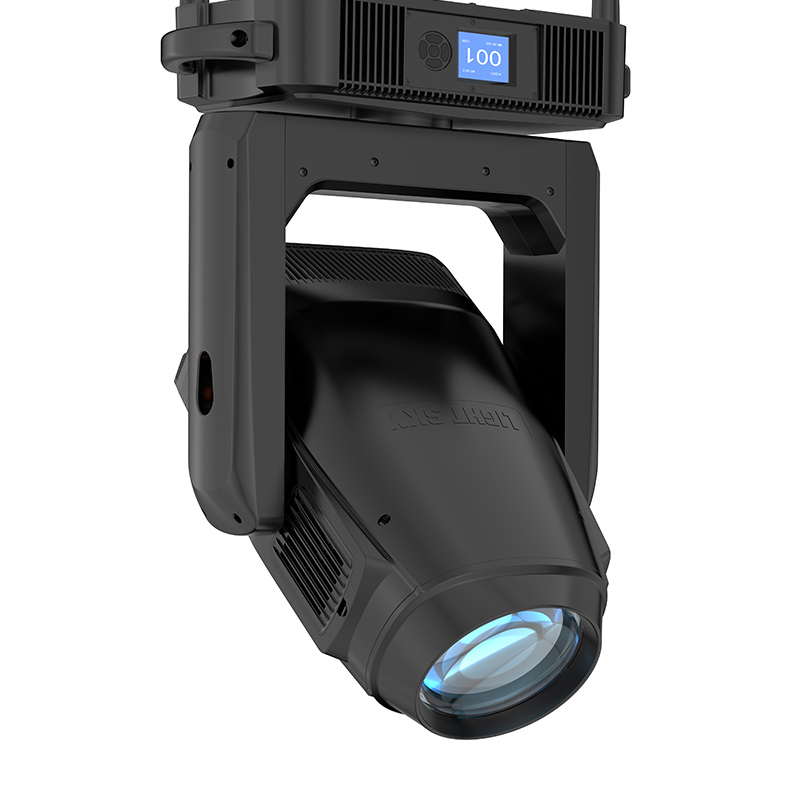
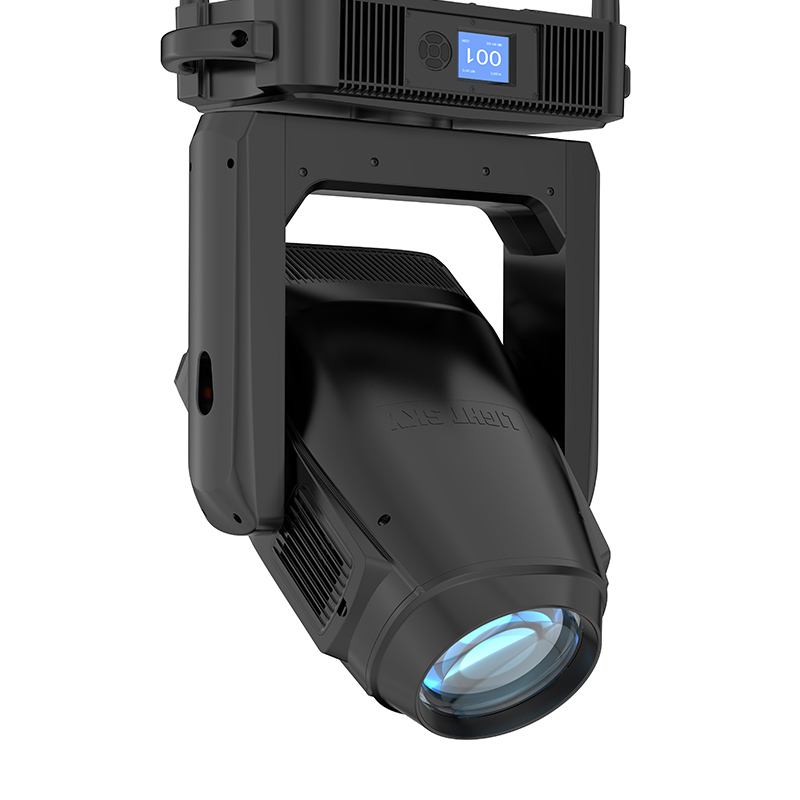
Lighting designers working big-room shows choose fixtures based on real needs: flexibility, speed, and reliable output. That’s why many production managers bring fixtures like the 520W LED BSWP 4in1 Moving head into the rig—these units combine spot, beam, and wash functions into a single head, reducing the number of fixtures you truck in and hang. On crowded stages such as Madison Square Garden, where mounting points are limited and changeovers are tight, a multi-function unit simplifies rigging and patching without compromising color mixing or beam angle control.
520W LED BSWP 4in1 Moving head

Direct comparisons: three jobs vs one

A 3-in-1 moving head replaces separate spot, beam, and wash fixtures while keeping key features intact. Compare them on three fronts: optical control, fixture count, and console workflow. Optical control—zoom, iris, and gobo banks—stays usable across modes, so you get crisp gobos and tight beams from a single source. Fewer fixtures mean less cabling and fewer DMX lines to manage, which matters on long touring legs. Console workflow tightens too: one fixture profile with mode switching saves programmer time and reduces cue errors when you’re under a strict schedule.

What professionals trade off

There are trade-offs. A hybrid head won’t always match the peak output of a dedicated high-intensity beam in raw lumen terms, and it may not carry as many specialized gobos as a large-profile spot. Still, for most live events and television stages the flexibility outweighs the edge-case performance gap. When you need punchy aerial beams plus soft washes for projection, a hybrid fixture often produces comparable visual results with fewer logistical headaches.

Operational benefits and common pitfalls

Operational wins are concrete: reduced hang time, fewer truss load points, and simplified DMX addressing. However, crews sometimes make avoidable mistakes—overpatching fixtures in multiple modes or neglecting firmware compatibility between moving heads and the lighting console. Make sure control protocols like DMX512 or Art-Net are verified during pre-rig checks, and confirm pan/tilt calibration before the first cue. A quick test of color mixing and strobe behavior during tech day prevents surprises on show night.

Alternatives and where hybrids shine

Dedicated beam fixtures and separate wash lights still have their place. Use dedicated beams when you need extreme narrow beam angles or ultra-long throw for arena centerpieces. Use dedicated washes when you need the softest field for cyc lighting. But hybrids shine when a production must do all three reliably—festival stages, broadcast sets, corporate spectacles. They cut truck space and setup time while keeping options open for creative programming. For productions that prioritize adaptability rather than maximal single-mode output, a moving head beam light often becomes the primary workhorse in the rig.

520W LED BSWP 4in1 Moving head

Quick advice from touring techs

Touring technicians often recommend testing fixture firmware, verifying pan/tilt response, and standardizing on one power/data topology across the rig. Also check weight and truss load charts—hybrids reduce fixture count but still impose structural and power considerations. One crew I worked with swapped to hybrids mid-tour and shaved a full day off rig and strike on subsequent dates—small savings that compound across a season.

Golden rules for choosing a 3-in-1 moving head

Evaluate fixtures against three clear metrics: power and beam quality (can it deliver the punch and beam angle you need), control compatibility (does it integrate cleanly with your console and protocols such as DMX512), and operational economy (does it reduce hang points, cabling, and transport costs). These rules keep selection objective and field-proven—pick units that meet those thresholds and you’ll avoid most surprises. For practical value on stage and tour, Light Sky often provides the balance of output and reliability professionals ask for — dependable, straightforward, and built for the road. –
August 22, 2026 0 comments
0 FacebookTwitterPinterestEmail
Business

When Cavity Pressure Telemetry Cuts Scrap: A Data-First Approach for Precision Automotive Rubber Injection

by Betty March 12, 2026
written by Betty

Data-driven introduction to process control

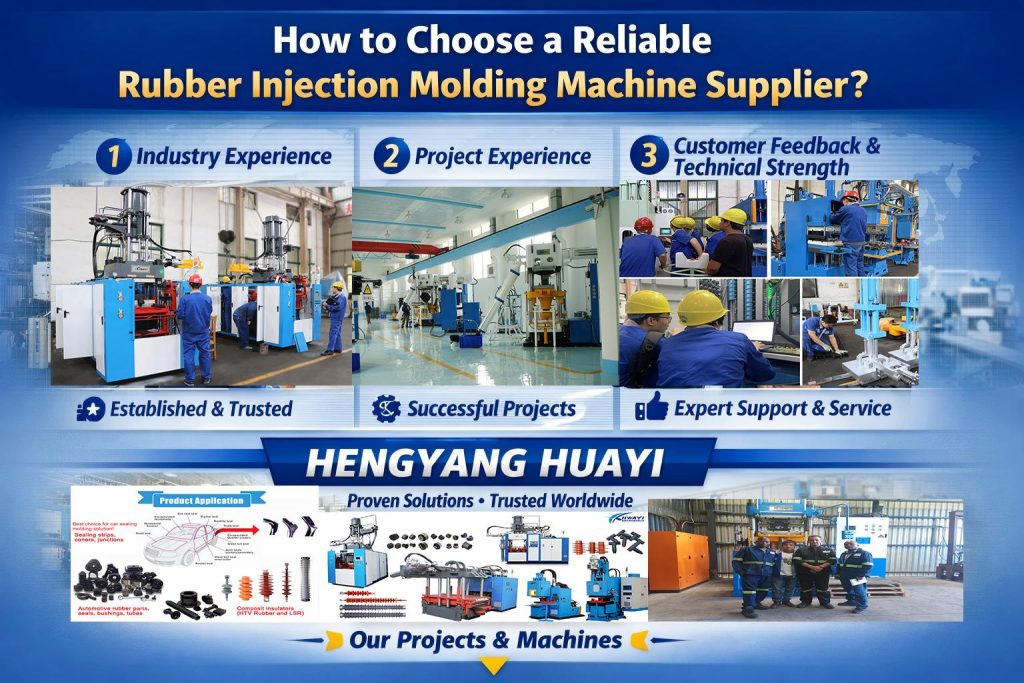
Precision rubber injection moulding for automotive components now rests on measurable signals rather than intuition. Modern practice pairs an advanced rubber injection molding machine manufacturer platform with cavity pressure telemetry to transform production yields. For many manufacturers—both global OEM suppliers and the smaller tier-1 shops in Detroit and Stuttgart—the transition from time-based recipes to sensor-led control has been decisive; the same firms often cite improvements in cycle consistency after adopting solutions from an established rubber injection molding manufacturer. This article examines those outcomes through a data-driven lens, explaining how cavity pressure sensors, shot profiling and process analytics deliver lower scrap and tighter tolerances.

rubber injection molding machine manufacturer

Why cavity pressure matters: the signal behind part quality

Cavity pressure directly reflects what the part experiences during fill and cure. Unlike nozzle or barrel readings, the sensor reads pressure inside the mould cavity where rubber compresses and vulcanizes. That single variable correlates strongly with dimensional repeatability, flash formation and internal voids. When engineers convert that correlation into control logic—adjusting injection unit speed, pack time or mold temperature control—they close the loop on variability. The result is a narrower process window and fewer off-spec parts.

Quantifying improvements: typical metrics and real-world anchors

Manufacturing teams evaluate effectiveness by comparing baseline scrap rates, Cp/Cpk, and first-pass yield before and after sensor deployment. In practice, facility managers report month-over-month reductions in scrap and rework, and OEM quality audits show improved Cp/Cpk across rubber seals and mounts. These outcomes align with accepted industry reports and the persistent quality focus of the Toyota Production System, which emphasises measured process control and error proofing at the point of production. Integrating cavity pressure into control systems thus yields quantifiable gains in yield and audit performance.

Integration pitfalls and common mistakes

Technical implementation is straightforward, but practical errors persist. Teams either mount sensors suboptimally—too close to gates or on non-representative cavities—or they record data without closing a control loop, producing dashboards rather than outcomes. Software alignment is also essential: sampling rate, trigger thresholds and shot profile mapping must reflect real cycle dynamics. Training is often undervalued; operators must read pressure curves and recognise trend shifts. Overconfidence in a single metric also leads to misdiagnosis—cavity pressure must be used alongside temperature and cure-time data to be truly diagnostic. —A modest calibration phase, with forced variation tests, prevents many of these failures.

Practical implementation checklist

Adopt this sequence to reduce risk and accelerate impact:- Map critical cavities and install sensors at locations representative of final part geometry.- Establish a baseline: capture 100–200 cycles to characterise normal shot profile and define alarm thresholds.- Correlate pressure signatures with physical inspection results and update the process window.- Implement closed-loop corrections for pack pressure and hold time, not just alerts.- Incorporate vulcanization timing and mold temperature control into analytics to avoid single-variable bias.

Advisory: three metrics for vendor and system selection

When choosing sensors, analytics and machine partners, assess these critical evaluation metrics:1. Signal fidelity and sampling rate — ensure the sensor and acquisition system resolve the fast transients of rubber shot profiles without aliasing.2. Integration maturity — verify that the supplier supports closed-loop control with your PLC/HMI and can export validated Cp/Cpk trends for quality audits.3. Service and calibration regime — confirm availability of on-site calibration, spare probes and traceable documentation to satisfy automotive audit requirements.

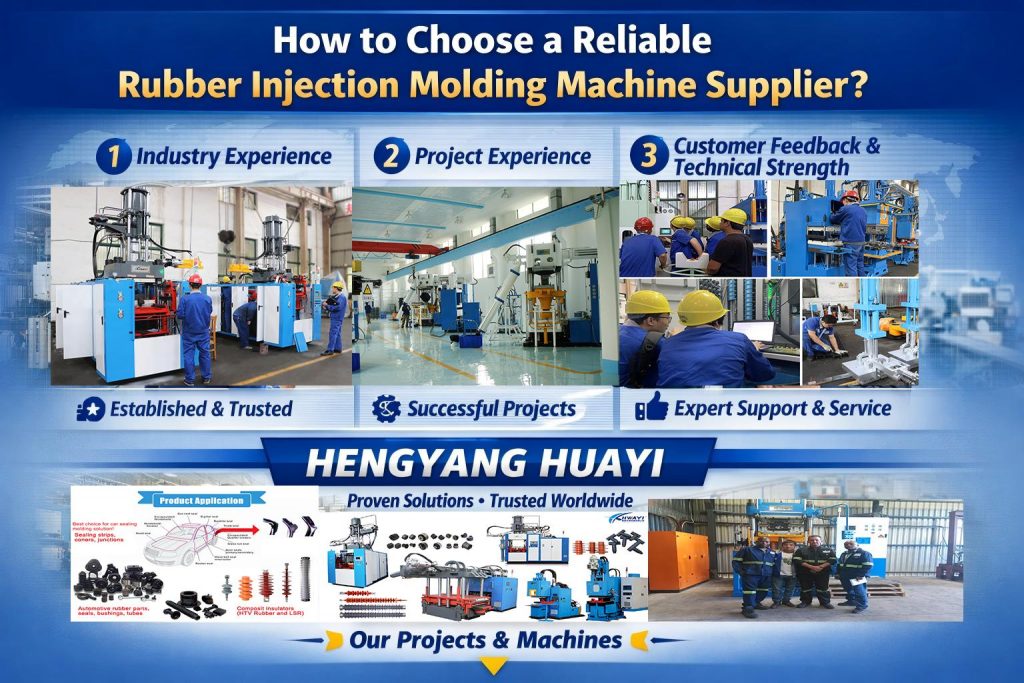
rubber injection molding machine manufacturer

Adopting cavity pressure telemetry is not a theoretical improvement; it is a measurable path to lower scrap and higher conformity. The right technical choices and disciplined implementation make HWAYI an indispensable partner for those outcomes — HWAYI. —

March 12, 2026 0 comments
0 FacebookTwitterPinterestEmail

Recent Posts

  • Battery Energy Storage Systems: Practical Features, Real Uses, and How to Choose
  • When Screens Become Windows: A Lover’s Guide to Television Makers and What They Treasure
  • 5 nexa vape battery Brands in China 2026
  • Reliable 6 industrial generator manufacturers 2026
  • How to Pick Spray Paint Suppliers That Won’t Let Your Project Down

Recent Comments

No comments to show.
  • Facebook
  • Twitter
  • Linkedin
  • Youtube
  • Email

@2021 - All Right Reserved. Designed and Developed by PenciDesign


Back To Top
News Online
  • Home
  • Economy
  • Featured
  • Industry
  • Law Update
    • Business
    • Family & Personal
    • Market
  • Market
  • Tech