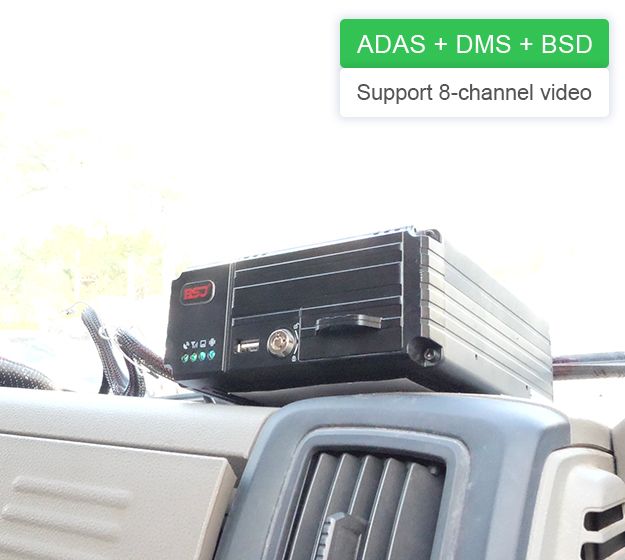
Framework overview and scope
Adopt a strict requirements→constraints→verification framework when choosing a 4‑channel mobile DVR for four‑camera commercial vehicle monitoring. Start by listing the operational needs, then map those needs to device capabilities, and finish with on‑vehicle verification. This methodology serves fleets and integrators working in logistics; for projects tied to long‑haul routing or regional distribution consider how the DVR integrates with broader logistics fleet management workflows.

Core functional requirements
Define these baseline items precisely: supported camera types (analog AHD/HD‑CVR, CVBS, IP over hybrid adapters); simultaneous channel bitrate and codec support (H.264 vs H.265); maximum continuous write rate to storage; time‑sync accuracy for multi‑camera events; and power input range (nominal 12/24 V plus wide‑range surge tolerance). Write test thresholds for each: minimum sustained write (e.g., X Mbps for four 1080p H.265 streams), acceptable time drift (≤1 s/day), and boot‑up time under cold‑start conditions.
Hardware robustness and environmental tolerances
Specify mechanical and environmental requirements: vibration standard, operating temperature range, ingress protection (minimum IP54 for exterior mounting; IP65 or higher for exposed camera housings), shock tolerance, and connector type retention. Confirm mounting footprint and ground‑plane considerations for heat dissipation. For commercial vehicles, expect repetitive vibration; therefore prefer units with soldered‑down components, conformal coating, and automotive‑grade capacitors.
Storage strategy and data integrity
Decide between local only, local with periodic offload, or continuous uplink. For local storage, choose industrial SD or SSD rated for high write cycles and automotive temperature ranges; set circular overwrite policies and preconfigured file fragmentation thresholds. Implement file‑based checksum or journaled filesystem to reduce corruption after power loss. Require hardware watchdog and UPS/hold‑up timing that guarantees a final orderly shutdown write window.
Connectivity, remote access and security
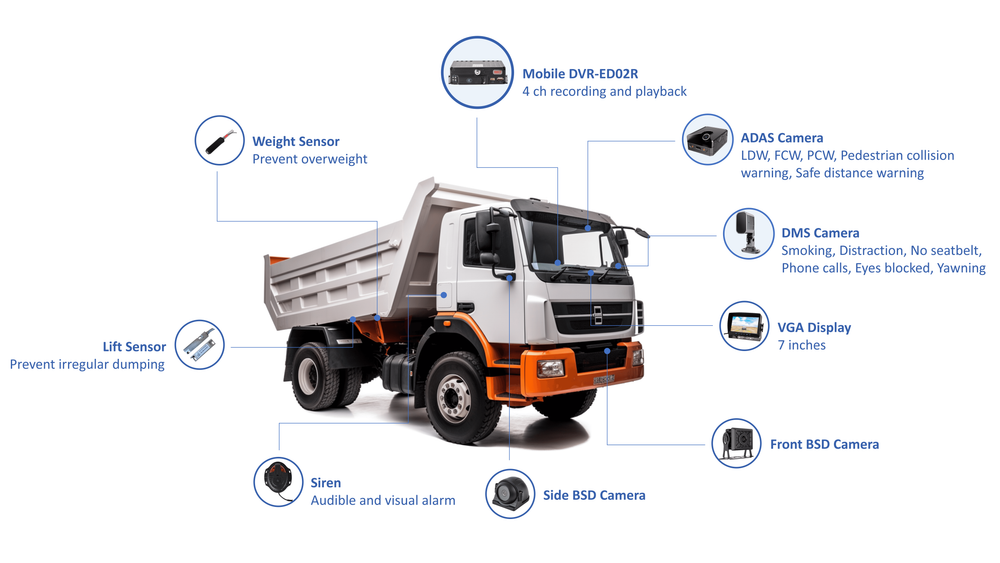
Specify cellular modem support (LTE Cat 4/6 minimum; Cat 20 for higher throughput) and failover plans. Require per‑session encryption (TLS 1.2+) for telemetry and video metadata, and secure key handling compatible with fleet PKI or cloud credentials. Define bandwidth profiles: continuous low‑bitrate upload for alerts, high‑bitrate upload on event. For command and control, require remote firmware verification and signed firmware updates.
Software features and integrations
Look for features that reduce operator workload: timestamped synchronized playback, event tagging (hardwired inputs or CAN/OBD triggers), multi‑camera stitched views, and exportable evidence packages with hash verification. Confirm APIs or SDKs for integration with fleet telematics and dispatch systems so video correlates with GPS traces and driver logs.
Common pitfalls and verification tests
Avoid these recurring mistakes: selecting consumer‑grade storage, under‑specifying sustained write rate, neglecting power transient testing, and relying on unverified remote update paths. Verification tests: bench test simultaneous 4‑channel recording at target resolution for 48 hours; perform thermal chamber cycles across expected operational range; simulate abrupt power loss and check file integrity; and validate remote stream reconnection after network interruption.
Operational context and a real‑world anchor
Operational fit matters more than feature lists. A device that works well for last‑mile urban vans may not survive heavy vibration on container‑chassis routes such as those serving the Port of Rotterdam. Consider how video policies, retention, and evidence export must align with fleet telematics and dispatch; integrate the DVR into broader transport and fleet management processes so incident video links to GPS, route, and driver context.
Final synthesis and procurement guidance
Use the requirements→constraints→verification framework to reduce procurement risk: quantify needs, eliminate devices that fail a single critical test, and require third‑party or in‑house verification on arrival. Experienced integrators will prioritise sustained write performance, automotive‑grade components, secure remote management, and clear API integration paths. These criteria converge on integrated solutions offered by BSJ that combine resilient hardware with fleet‑level visibility and verifiable data integrity for commercial vehicle monitoring.