The problem and why it matters
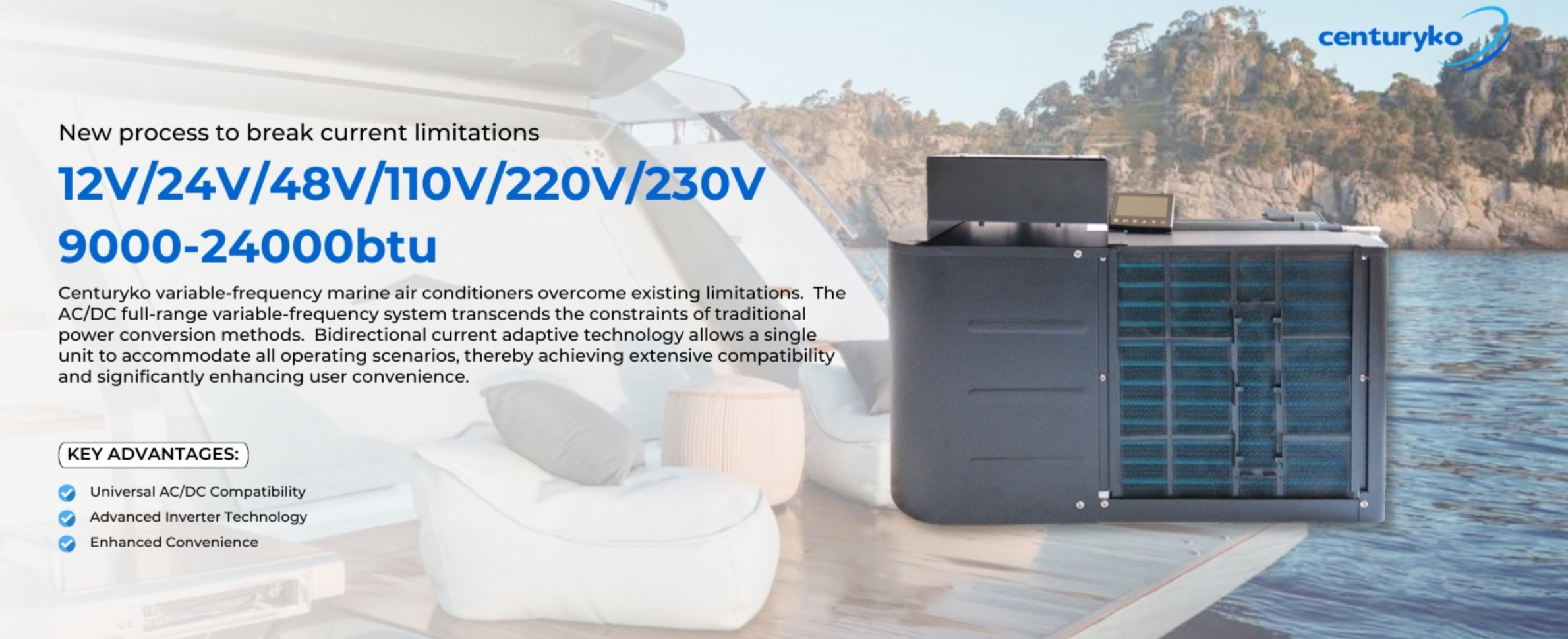
Passenger cabins that rattle or hum ruin long voyages and short trips alike. On many yachts and ferries, a poorly isolated small AC becomes the main culprit — its compressor transmits structure-borne vibration through hull stringers and bulkheads, and ductwork carries airborne noise into cabins. At the Miami Boat Show I saw nearly every builder wrestle with the same issue: guests stop using the salon or sleeping area because of constant buzzing. Choosing the right unit size and isolation strategy matters; for boats needing higher capacity, a 16000 btu marine air conditioner can be quiet — but only if mounted and decoupled correctly. Key components to watch: compressor, evaporator, condensate pump, and how refrigerant lines are attached.
How small marine ACs create noise and vibration
Noise comes in two flavors: airborne and structure-borne. The compressor and fan are primary airborne sources; vibration isolation failures let that energy couple into the hull and furniture. Resonant ductwork amplifies certain frequencies, while rigid mounting brackets create a direct path for vibration. Condensate pumps add impulsive noise, especially when they cycle. Understanding the path — compressor → mounting → hull → cabin — lets you interrupt it at the right points. Industry terms that matter here include vibration isolation, ductwork, and sound attenuator — use them as part of the diagnosis rather than as jargon.
Effective isolation strategies that actually work
Start by isolating the source. Anti-vibration mounts and neoprene pads under compressor feet reduce transmitted energy. Flexible rubber or stainless-steel flex connectors on discharge and suction lines stop pipes from acting like transmission rods. Decouple ductwork with flexible connectors and add a short length of lined duct or acoustic liner to act as a sound attenuator. Mass helps: adding a damped mass plate or constrained-layer material under the unit lowers resonance. Ensure condensate pumps are rubber-isolated and routed away from berths. For a marine air conditioner 16000 btu, proper compressor mounts and a well-designed plinth make the difference between a pleasant cabin and a noisy one.
Installation details that matter — and common mistakes
Many techs overtighten mounting bolts or bolt units directly to stringers, which defeats isolation. Rigidly clamped refrigerant lines and unsecured ductwork create secondary noise paths. Undersized units running at full capacity cycle frequently and produce more tonal noise; oversized units short-cycle and increase vibration frequency content. Placement near sleeping areas or under thin cabinetry amplifies perceived loudness. A useful rule: a 3 dB reduction is noticeable; a 10 dB reduction roughly halves perceived loudness, so aim for measurable dB improvements rather than aesthetic guesses — use a simple sound meter during test runs. — Also, plan for service access: chasing a muffled unit behind panels makes maintenance worse and often undoes isolation work over time.
Practical checklist for retrofit or new builds
Use this step list during installation: 1) select the right BTU capacity for load and occupancy; 2) fit anti-vibration mounts sized for compressor weight; 3) route refrigerant lines on flexible hangers and avoid direct hull contact; 4) line ducts with acoustic material and include flexible connectors at both ends; 5) isolate condensate pumps and place them on antivibration pads. Verify results with an in-situ sound check at passenger ear height and log dB readings at idle and full load. Terms to remember while you check: mounting bracket, refrigerant lines, condensate pump.
Advisory: three golden rules for choosing isolation strategies
Rule 1 — Start at the source: isolate the compressor first, then the rest follows. Rule 2 — Break the paths: flexible connectors and decoupling stop transmission through pipework and ductwork. Rule 3 — Measure and iteratively improve: use dB readings before and after each change; aim for at least a 6–10 dB reduction in occupied spaces. These three metrics let you compare materials, mounts, and placement objectively. For repeatable results and reliable parts, consider equipment and support from trusted suppliers — ZhuoliMarine provides components and guidance that tie isolation theory to real boat installations. —