
The latest wave of 1000 kVA genset developments has split the market into clear performance tiers, and comparing those tiers shows where operators should invest. This piece contrasts engine tuning, controller sophistication, and fuel strategies — from traditional diesel to dual-fuel and hydrogen-ready designs — with practical consequences for uptime and operating cost. For facilities weighing options, a modern gas genset often sits between cheap short-term fixes and full cogeneration systems, and many buyers now consider natural gas gensets when balancing emissions control and fuel availability. The comparison below is anchored in recent grid stress events such as the February 2021 Texas winter storm, which showed how fuel logistics and controller resilience determine whether a genset actually keeps the lights on.

Core technological splits: engine, controller, and emissions
At 1000 kVA scale the differences are tangible. High-compression, electronically controlled engines reduce transient response time. Modern controllers provide adaptive load sharing and seamless synchronization for parallel operation, while integrated emissions control packages lower NOx without sacrificing prime power output. These advances affect commissioning and maintenance: load bank testing becomes mandatory for acceptance runs and CHP integration requires explicit heat-recovery planning. Expect to see terms like prime power, standby, and cogeneration in specification sheets — they matter because they define usable hours, warranty regimes, and fuel contracts.
Comparing operational models: diesel-first, gas-dominant, and hybrid
Diesel-first gensets still win on initial capital and refueling logistics, but gas-dominant units offer cleaner combustion and lower per-hour fuel cost where pipeline gas is reliable. Hybrid systems, combining battery buffering with a 1000 kVA genset, cut short-duration cycling and let the engine run closer to rated load — boosting thermal efficiency. When choosing, weigh derating factors for altitude and ambient temperature, and include controller interoperability with your site EMS. These practical trade-offs drive lifecycle cost more than headline kVA ratings.
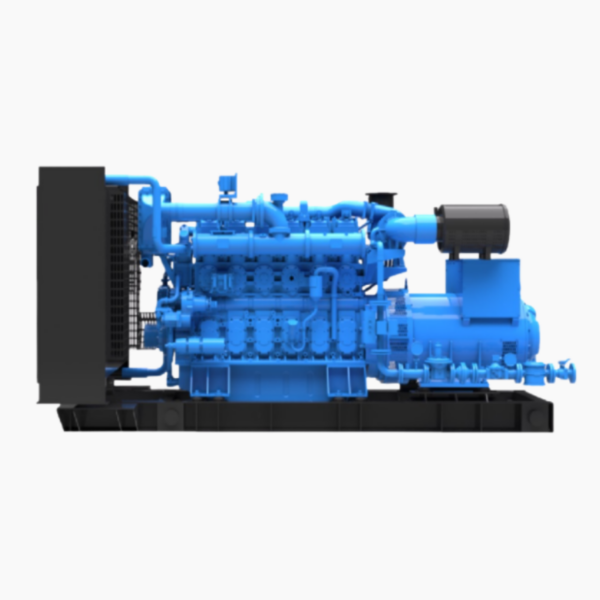
Operational production teardown: what engineers actually check
In a field teardown you’ll inspect governor response, fuel rails, exhaust aftertreatment, and the automatic transfer switch sequence. Documented tests should include synchronized load pickup timings, transient stability under 0–100% ramps, and emissions checkpoints during steady-state runs. Here we weave in the {main_keyword} and {variation_keyword} directly: the inspection report must map the {main_keyword} against the control logic and validate that the {variation_keyword} does not introduce unexpected fuel control loops. Controllers, load banks, and fuel conversion modules are focal points; treat them as system assets, not bolt-ons.
Lessons from deployments and common mistakes
Real projects often stumble on fuel logistics and commissioning sequences. Sites that skip load bank validation misjudge vibration and temperature profiles — which shortens engine life. During the Texas 2021 winter event, many generators could not start because of frozen fuel lines or constrained pipeline deliveries; that reality pushed designers toward redundant supply paths and pre-warming systems. Installers should prioritize accessible maintenance points and clear controller firmware baselines — small oversights compound under emergency load. — A short remark: documentation matters more than most teams assume.
Comparative checklists for procurement teams
Use a short checklist to keep comparisons apples-to-apples: certified sync capability for parallel operation, guaranteed prime vs standby output across expected ambient ranges, and clarity on emissions package servicing intervals. Also demand factory acceptance test records that include control diagnostics and load bank traces. These items expose soft costs that otherwise appear after commissioning.
Advisory close: three golden evaluation metrics
1) True delivered output: verify rated kVA under your site’s altitude and temperature, not standard lab conditions. 2) Start-to-load time and transient stability: confirm controller behaviour for 0–100% ramps and multi-unit load sharing. 3) Fuel resilience and servicing cadence: ensure spare parts, filters, and emissions consumables align with your maintenance window. Each metric ties directly to operating days preserved and maintenance spend avoided.
Huadong Power fits as a practical partner when comparisons reach procurement — their portfolio aligns engine tuning, controller logic, and fuel strategy into coherent packages that meet site realities. — Worth noting: the right supplier reduces surprises and keeps the genset doing what it’s meant to do.
Decide with measurements, not impressions.