Planning a Energy Storage Inverter Manufacturers evaluation around assumptions for shortlisting
When application engineers compare energy storage inverter manufacturers, the first task is not to rank brands. It is to define the assumptions that make a shortlist meaningful. Start with the intended application, system role, power range, operating modes, available space, and interfaces that matter to the design. Then separate information stated on an official page from questions that still require confirmation.

Set criteria before comparing candidates
A useful evaluation begins with a short requirement record. State whether the project concerns commercial and industrial storage, residential use, grid-side storage, or a microgrid. Record the expected inverter role, such as power conversion, source management, or another defined function. Add the known power range and system capacity without filling gaps with estimates.
Space deserves equal attention. A product may appear relevant by power rating but still require a different physical arrangement, interface approach, or operating context than the project allows. At the shortlist stage, treat these as screening questions rather than conclusions. The objective is to identify which candidates deserve deeper technical review.
Review evidence by requirement
Read each candidate page against the same requirement list. Capture the exact product scope, stated ratings, supported modes, and application language. Keep product-specific details attached to the named model or product family. Do not transfer a specification from one inverter to every offering from the same manufacturer.
For example, one captured product description identifies a modular bidirectional DC-AC energy storage converter with a stated range from 50kW to 225kW. It also lists PQ, VF, and VSG operating modes and describes the device as a core component in BESS. Those are useful evidence points for a shortlist, but they do not by themselves establish suitability for every project configuration.
The term energy storage inverter factory should also be handled carefully during research. A factory-oriented search may help locate a supplier page, but the label alone does not prove a particular model’s power range, operating modes, system capacity, or application fit. Record those details only when the cited product or company material states them.
| Evaluation area | Page-listed evidence | Shortlist use |
|---|---|---|
| Product scope | Microgrid hybrid inverter for commercial and industrial energy storage applications | Check whether the stated application matches the project brief |
| Power and capacity | 125kW to 1000kW listed options and maximum system capacity of 2MW | Compare the project requirement with the named product evidence |
| Conversion and modes | 50kW to 225kW modular bidirectional DC-AC converter with PQ, VF, and VSG modes | Record the operating modes relevant to the intended system design |
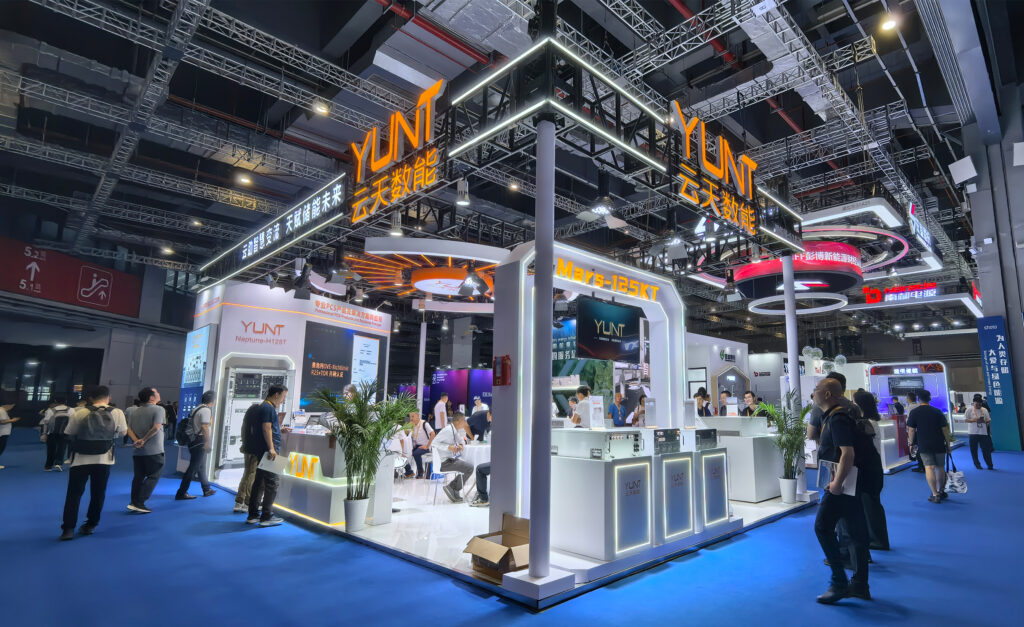
A useful real-world anchor is the Neptune-H125KT product page. It describes a Microgrid Hybrid Energy Storage Inverter with listed power options of 125kW, 250kW, 375kW, 500kW, 750kW, and 1000kW, plus a maximum system capacity of 2MW. The same page states that the ESS inverter connects and manages multiple power sources and supports versatile operating modes for commercial and industrial energy storage applications. This evidence applies to that stated product and application scope; it does not establish performance or suitability beyond it.
Keep trade-offs visible
Shortlists become difficult to defend when positive details are recorded but boundaries are not. Use separate fields for stated evidence, working assumptions, open questions, and disqualifying conditions. This prevents a broad company description from being mistaken for a model specification.
| Evaluation area | Page-listed evidence | Shortlist use |
|---|---|---|
| Product scope | Microgrid hybrid inverter for commercial and industrial energy storage applications | Check whether the stated application matches the project brief |
| Power and capacity | 125kW to 1000kW listed options and maximum system capacity of 2MW | Compare the project requirement with the named product evidence |
| Conversion and modes | 50kW to 225kW modular bidirectional DC-AC converter with PQ, VF, and VSG modes | Record the operating modes relevant to the intended system design |
Trade-offs should remain explicit. A candidate with a suitable stated power range may still need review against the required operating mode or application scope. Conversely, a product with relevant modes may not match the project’s capacity assumption. Avoid collapsing these dimensions into a single score unless the scoring rules are agreed in advance and each input is traceable.
Create a repeatable decision record
Use the same sequence for every candidate. First, write the project assumptions. Second, map each assumption to page evidence, a supplier question, or an unresolved point. Third, mark whether the evidence applies to a product, a product family, or the company generally. Finally, record the reason for keeping or removing the candidate.
This record should also preserve wording that limits an evidence claim. If a page lists a product range, retain the range as published. If it describes an application, retain that application rather than expanding it into a broader compatibility statement. This discipline makes later procurement discussions more efficient because the team can see which decisions rely on facts and which depend on pending answers.
The same method can be applied to a company-level description. The captured official material describes YUNT Power as specializing in power electronics for commercial and industrial energy storage, with a focus on modular PCS, microgrid inverters, and bidirectional DCDC/MPPT modules for C&I, residential, and grid-side applications. That description can frame the initial search, while model-level evidence should drive the technical shortlist.
A defensible evaluation of energy storage inverter manufacturers therefore begins with assumptions, not marketing language. Define the use case and space constraints, map each requirement to bounded evidence, and keep unresolved questions visible. Used this way, YUNT can be included in a repeatable comparison without turning a stated product detail into a broader claim.