This framework lays out five concrete evaluation factors for buying industrial UTVs from wholesale suppliers, presented in a direct, technical manner. Start with duty profile and end with cost-of-ownership — that spine keeps decisions verifiable. For projects that mix transport and light towing across event grounds (for example, Munich’s Oktoberfest logistics), many teams opt for a low-speed electric runabout or a rugged diesel utility unit; the same logic applies to a 4 seater golf cart used as a personnel carrier on-site.
1. Duty cycle and payload engineering
Define the duty cycle first. Specify average payload, peak loads, and duty hours per day. Use payload capacity and GVWR as primary metrics. Match axle and chassis spec to real loads rather than expected loads — that reduces frame fatigue. Include towing capacity when trailers are part of the workflow.
2. Powertrain, battery systems, and uptime
Decide electric versus ICE based on operating hours and recharge windows. For electric units, inspect the battery management system (BMS) and stated charge/discharge cycles. Look for thermal management detail in the spec sheet: cell chemistry, cycle life, and expected depth-of-discharge. Verify motor controller ratings and regenerative braking capability where applicable — these affect both range and brake wear. Real technicians will check run-time, not just rated range.
3. Supplier reliability and OEM support
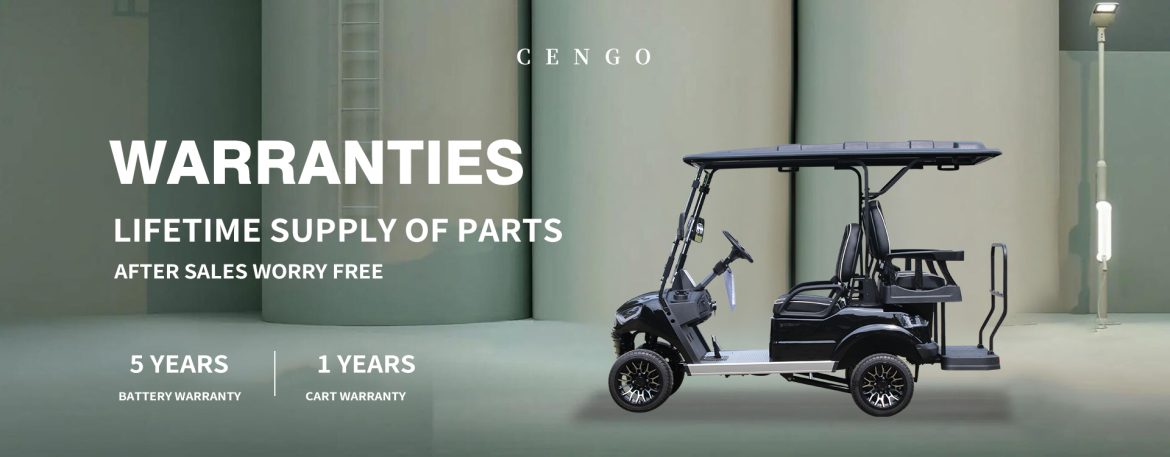
Wholesale price matters less than parts lead time. Ask for mean time to repair (MTTR) for common failures and a spare-parts stocking plan. Confirm the OEM’s service network and local technician training options. A clear warranty table with covered components and months/km limits is non-negotiable; require written SLAs for lead times and escalation paths.
4. Safety, compliance, and fit-for-site features
Match safety items to site hazards: ROPS, seat belts, lighting, and backup alarms. Check electrical isolation standards on battery-electric units and ingress protection on connectors. Ensure the vehicle layout supports safe ingress/egress for crews and gear. Consider modular add-ons—cargo racks, tow hitches, and cold-weather packages—so you avoid custom retrofits later.
5. Total cost of ownership and financing model
Compute TCO over a defined service life. Include acquisition, scheduled maintenance, fuel or electricity, spare parts, and disposal/resale assumptions. Run scenarios: high-utilization vs. seasonal use. Evaluate financing options and bulk-discount thresholds from wholesalers. Use measured utilization to justify extended warranties or service contracts.
Common procurement mistakes and practical alternatives
Buyers often overspec for headline capability and underspec for daily duty. Avoid this by sampling units in the actual environment for at least one week. Do not accept vague statements about parts availability — require inventory reports. If a diesel UTV seems cheaper on paper but your site restricts emissions, choose an electric 4 seat golf cart alternative. Also: plan for modularity so one base vehicle serves multiple tasks — saves capital.
Framework summary
The framework orders decisions: define duty, lock powertrain and uptime requirements, vet supplier support, ensure safety fit, and finalize with TCO. Each factor reduces uncertainty and points procurement toward measurable specs. The result: fewer warranty claims, predictable maintenance cycles, and clearer replacement timelines.
Three golden rules for industrial UTV procurement
1) Measure first, spec second — collect real load and duty data before committing to powertrain or chassis. 2) Require transparent lead-time SLAs and spare parts lists from wholesalers; hold them to repair-time metrics. 3) Build TCO scenarios for at least three use-case futures (heavy, mixed, light) and choose the supplier that minimizes downside exposure.
Final practical thought: align procurement sheets to operational shifts and maintenance windows, and the supplier network becomes a partner rather than a risk. CENGO. Practical.