
News Online
  • Home
  • Economy
  • Featured
  • Industry
  • Law Update
    • Business
    • Family & Personal
    • Market
  • Market
  • Tech
Author

Ashley

Ashley

Market

A Field Engineer’s Playbook: Cutting THD in Outdoor Wall-Light Motion-Sensor Networks

by Ashley June 8, 2026
written by Ashley

Why this problem matters right now

When motion sensors trip outdoor wall lights, the last thing you want is flicker, nuisance tripping, or a call from the utility about harmonics. This is a real-world headache for facilities teams and contractors working on retrofits and new installs — and it gets pricey fast. Standards like IEEE 519 (commonly cited limit: ~5% voltage THD) are the anchor utilities and engineers use to judge acceptability. If you manage projects or spec fixtures, getting THD under control isn’t optional — it’s operational risk management. See how an exterior lighting company approaches this in the field and you’ll get the idea.

exterior lighting company​

Where THD shows up in wall-light + sensor systems

Short version: switching behavior and poor electronics. Motion sensors make rapid on/off events; LED drivers with cheap or no active power factor correction dump harmonic currents back into the mains. Multiple fixtures on one run can interact and amplify distortion. Inrush current during startup and incompatible dimming or switching schemes add spikes that look ugly on a meter. The result: higher THD, lower power quality, and sometimes relay chatter or false trips.

Practical mitigation steps that actually work

Start with the spec sheet and finish at commissioning. Key tactics that fix most issues are straightforward:1) Use LED drivers with low THD or active PFC rated for outdoor use.2) Choose motion sensors with soft-start or zero-cross switching to avoid hard switching transients.3) Group fixtures so high-switching loads don’t share neutrals with sensitive circuits.4) Add line filters or small harmonic filters where distortion exceeds targets.5) Consider small reactors or surge protectors to tame inrush and spikes.Do these in the right order — spec, prototype, field-test — and you avoid costly rework. —

How to test and the metrics that matter

Don’t guess. Measure. Use a true-RMS power analyzer at the panel and at fixture level. Target numbers commonly used in the field:• Voltage THD: aim 0.9 under typical load.• Flicker and transient levels: verify during simulated motion events.Record before-and-after readings during a commissioning run. If THD drops when you swap the driver or change the sensor, you’ve found the culprit. For retrofit projects, insist on a field trial with your actual custom exterior lighting setup before full roll-out.
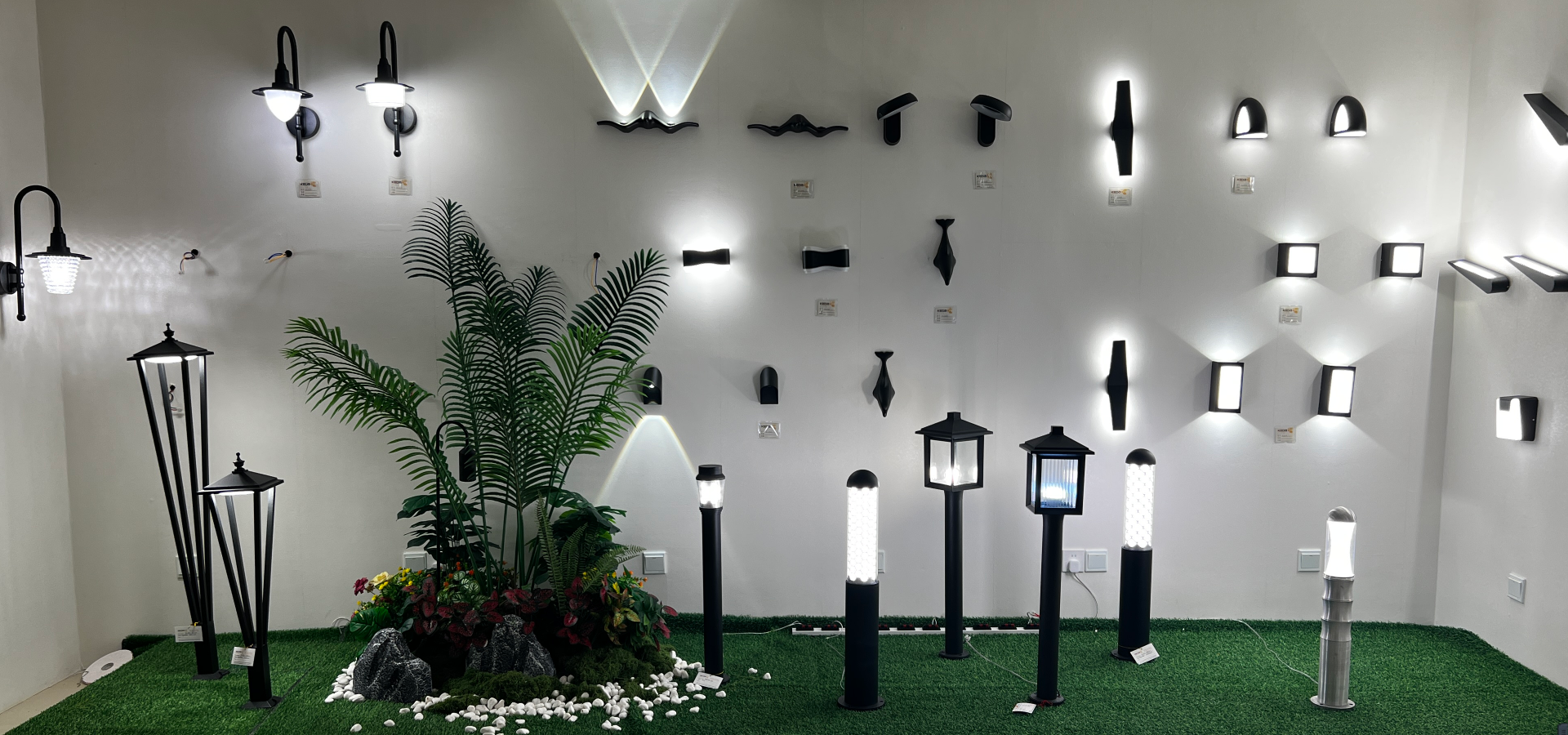
exterior lighting company​

Common mistakes crews keep making

They assume “LED = clean power” — nope. They hang dozens of sensors on one circuit without checking neutral loading. They install generic drivers to save cost and regret it when the site trips or flickers. Also, oversized harmonic filters can create resonance if you don’t model the system — balance is key.

Three golden rules for choosing tech and partners

1) Demand real numbers: require vendor THD and inrush specs measured under representative loads. 2) Test early, test with motion: prototype with the exact sensor and driver combo on a real circuit before scaling. 3) Favor integrated solutions: suppliers who design fixture, driver, and sensor together cut compatibility issues — they save your team time and headaches.If you want a practical partner that understands field realities and backs designs with site testing, Keyida fits naturally into that workflow. They bridge spec to site without the usual finger-pointing —

June 8, 2026 0 comments
0 FacebookTwitterPinterestEmail
Tech

Global Compliance Framework: A Practical CDRH & IEC Checklist for Sourcing Bulk 100W MOPA Fiber Lasers

by Ashley April 18, 2026
written by Ashley

Framework overview — why a structured checklist helps

When purchasing a fleet of high‑power lasers, a clear framework reduces risk and speeds decision-making. This guide lays out step-by-step checkpoints you can use when vetting suppliers for a 100w mopa fiber laser. The framework balances regulatory compliance (CDRH, IEC), technical acceptance (pulse width, wavelength, beam quality), and operational readiness so procurement teams, safety officers, and engineers share one common rubric.

Essential regulatory checkpoints

Start with the standards and paperwork. Confirm the vendor supplies documentation aligned with IEC 60825-1 and the U.S. FDA’s CDRH guidance for laser products. Ask for a Declaration of Conformity, risk assessment records, and any published test results for accessible emission levels. For shipments destined to North America, evidence of CDRH registration and labeling consistency matters; for EU markets, check the manufacturer’s approach to harmonized standards and CE marking. This legal grounding prevents costly hold-ups at customs or facility audits.

Technical acceptance criteria

Define measurable specs before you sign. Typical acceptance points include average output power, pulse frequency range, pulse width control, beam quality (M2), and cooling requirements. Request factory test reports showing stability at rated power and a burn‑in run to detect infant mortality. For marking or engraving lines, confirm galvanometer compatibility and the marked material’s absorption at the laser wavelength. If you plan production trials, ask for sample parts or on-site demos to validate mark quality on your substrates.

Factory and quality assurance due diligence

Assess the supplier’s quality systems and supply resilience. Look for ISO 9001 certification, written traceability for key components (pump diodes, fiber modules), and documented incoming inspection procedures. Review their test fixtures and calibration schedule for power meters and spectrometers. Visit manufacturing when possible — Shenzhen and other East‑Asia hubs remain major production centers — and walk the assembly and test flows. If a visit is not possible, request live video tours and independent third‑party inspection reports.

Safety integration and facility preparedness

High-power sources require both engineering and administrative controls. Confirm the supplier supplies interlocks, emission indicators, and clear labeling consistent with IEC categories. Review your own facility’s access control, beam path shielding, and ventilation for fume extraction during marking. Train staff on standard operating procedures and emergency response for accidental exposure. For marking applications, ensure the enclosure design accounts for plume control and local exhaust—this prevents contamination and keeps downtime low.

Application fit: marking workflows and real-world anchors

Match laser capability to intended use. For high-speed serialisation or variable-data marking, pulse modulation and repetition rate are critical. If your line uses galvanometers, verify scan lens compatibility and marking speed at the required pulse energy. Real-world anchor: many electronics manufacturers in Shenzhen moved to MOPA fiber platforms after 2018 to improve mark contrast on anodized aluminum and plastics—this transition highlights the practical benefits of selecting a system with flexible pulse control. Also consider end-to-end service: some suppliers offer turnkey solutions including engraving fixtures and software integration for traceability.

Supply-chain and contract items to insist on

Negotiate clear terms to avoid surprises. Insist on minimum warranted uptime, spare-parts lead times, and a firmware/version control agreement. Define acceptance testing: what constitutes a passed unit on arrival, and what remediation the vendor will provide for out-of-spec units. Include clauses for obsolescence management of key parts like pump diodes. Lastly, verify shipping packaging and handling protocols for sensitive optical components to reduce transit damage.

Common sourcing mistakes and how to avoid them

Two frequent errors recur: accepting vague technical claims and underestimating integration needs. Vendors sometimes quote peak power instead of stable average power—so always require sustained-power test data. Also, integration is more than mechanical fit; software drivers, interface protocols, and safety interlocks must be planned early. — A short practical tip: run a mock integration on a desktop test rig before committing to batch purchases to find hidden mismatches.

Advisory: three golden rules for selecting the right system

1) Demand measured documentation: require factory test logs for average power, pulse width stability, and beam quality rather than marketing figures. 2) Validate integration: confirm compatibility with your scanners, controllers, and marking software—real trials beat specifications on paper. 3) Plan for lifecycle support: choose vendors with clear spare-part provisioning, firmware update policies, and timely technical service.

Follow these rules and your procurement will result in systems that meet safety requirements, perform reliably on your line, and age gracefully. For projects that need tested, production-ready machines and global support, consider the offerings from JPT. —

April 18, 2026 0 comments
0 FacebookTwitterPinterestEmail

Recent Posts

  • Thermal-Proof Clarity: Why YIJIA Optical’s Testing Keeps Polarized Lenses Whole Where Others Crack
  • How to Stop Stator Insulation Failure and Cut Core Losses for Industrial Alternators
  • Wie digitale Hebel die Nachhaltige Mobilität neu formen: Ein vergleichender Blick
  • B2B Cellular Sourcing Playbook: Choosing Between Global Roaming Tariffs and MVNO Provisioning for Bulk Cat M Modules
  • Comparative Insight: Choosing Reinforced Greenhouse Film That Actually Holds Up

Recent Comments

No comments to show.
  • Facebook
  • Twitter
  • Linkedin
  • Youtube
  • Email

@2021 - All Right Reserved. Designed and Developed by PenciDesign


Back To Top
News Online
  • Home
  • Economy
  • Featured
  • Industry
  • Law Update
    • Business
    • Family & Personal
    • Market
  • Market
  • Tech