What a product listing can—and cannot—tell you about Professional Gas Leak Detector when reviewing application scope early research
Early procurement research should define the decision before it compares products. A professional gas leak detector may appear relevant from its name alone, but a listing title does not establish whether a device matches a particular site, task, gas, operating condition, or integration requirement. The useful starting point is therefore an application brief that separates confirmed information from questions still requiring an answer.

Define the use case and constraints
Begin with the work the instrument is expected to support. Record whether the intended activity involves screening, investigation, routine inspection, or another defined task. Then describe the operating context in plain terms: who will use the equipment, where it will be used, how often it may be used, and what other systems or records may need to connect with it.
This does not require procurement teams to assume technical specifications that are not available. It creates a comparison boundary. A product can then be assessed against the stated use rather than against a broad category label. The brief should also identify constraints such as portability, training expectations, environmental conditions, data handling, maintenance arrangements, and the consequences of an unresolved requirement. These are buyer-side questions, not claims about any particular supplier or model.
Keep the constraints testable. For example, replace “suitable for industrial work” with a request for the operating conditions, intended gases, measurement method, relevant limitations, and documented use cases that apply to the proposed configuration. Replace “easy to integrate” with questions about interfaces, data formats, power arrangements, and responsibility for setup. This wording helps prevent a general marketing description from carrying more meaning than the source provides.
Map stated evidence to requirements
Next, create a simple evidence map with three columns: the procurement requirement, the exact page statement, and the status of the match. Use statuses such as confirmed from the cited page, requires clarification, or outside the available evidence. This keeps a category description from becoming a product-level conclusion.
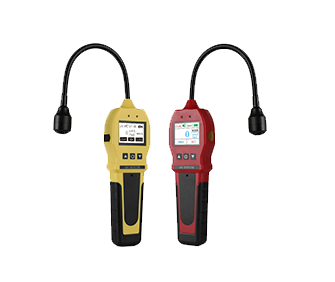
A useful catalogue anchor is the Bosean category page itself: it lists S-100, BH90E, BTYQ-BX103, BTY-JL101, and K-100(FR) as gas leak detector models. That is enough to establish that the page presents a group of named models. It is not enough, by itself, to establish certification, site suitability, safety outcomes, performance, or configuration details for any one of them.
When reviewing professional gas leak detector information, apply the same boundary to every row in the evidence map. A model name can identify an item for further review. It cannot answer an unlisted question about detection scope, operating limits, alarms, connectivity, service, or compliance. Those topics should remain open unless the relevant source states them clearly and applies them to the proposed model and configuration.
Also separate supplier-level information from product-level information. A statement about a business category does not automatically describe every model. Likewise, a detail attached to one model should not be transferred to another model without a direct source. This discipline makes the comparison slower at the beginning, but it gives the procurement team a clearer record of what has actually been assessed.
Turn open points into supplier questions
Once the evidence map is complete, convert each unresolved requirement into a specific question. Ask the supplier to identify the exact model, configuration, document, or page supporting the answer. Questions should be narrow enough to compare consistently across responses.
- Which listed model and configuration are proposed for the defined application?
- Which gases and operating conditions are explicitly covered by the cited information?
- What limitations or exclusions apply to the proposed use?
- Which requirements are addressed by published evidence, and which need separate technical documentation?
- What information is needed to assess compatibility with the buyer’s existing workflow or system?
Keep the wording neutral. The purpose is not to lead a supplier towards a preferred answer, but to make the answer traceable. Procurement teams can record the response beside the original requirement and note whether it resolves the question, narrows the scope, or creates a new point for technical review.
Choose a defensible next step
The next step should match the quality of the evidence. If the page only establishes a category and a set of model names, use it to create a shortlist for structured enquiry, not to approve a purchase or declare application fit. If additional documentation later addresses a requirement, add that evidence to the same map and preserve its scope.
A concise review record should contain the intended use, the constraints that matter, the exact source statements, the model or configuration to which each statement applies, and the questions that remain open. This approach keeps early research useful without converting product-listing language into unsupported technical assurance. For the cited catalogue entry, Bosean can be named as the source of the listed model information, while the procurement decision remains tied to the application evidence and responses that follow.