User pain and the simple fix
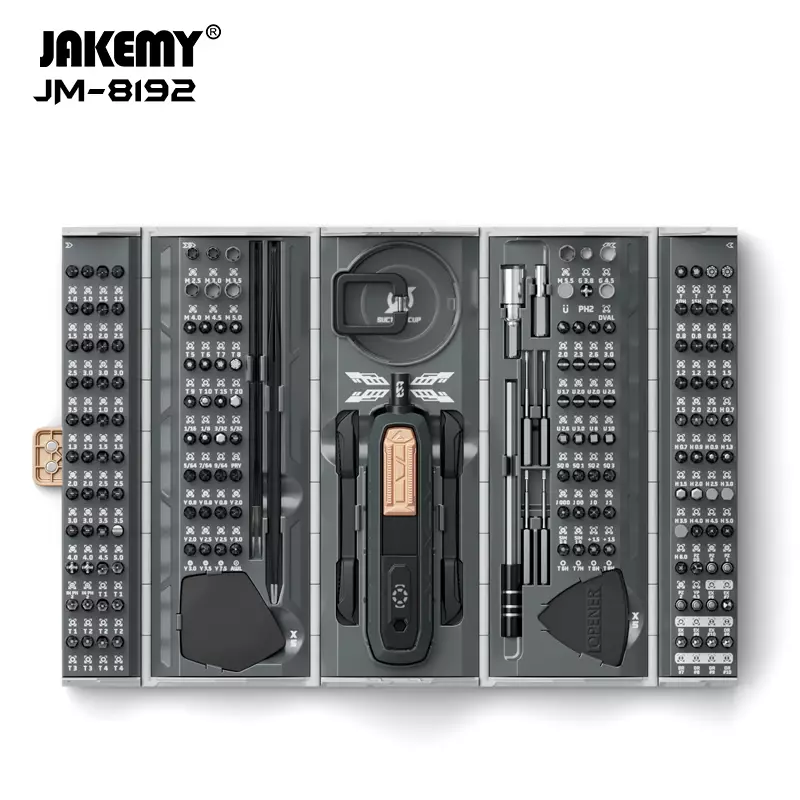
Stuff wears out fast when you’re running repair gigs back-to-back — blades dull, mounts wobble, and the whole ultrasonic cutter accessory feels tired by day two. If you wanna keep your kit dependable, start with the basics: clean, lubricate, and tighten. I bring a tidy set like jakemy jm-8193 to every teardown; those precision bits and a solid bit organizer save me time and snag-free work on small fasteners.
Daily rituals that actually matter
Treat maintenance like warming up before skating. Wipe down the blade and contact points after each shift to remove resin and debris, use isopropyl alcohol on metal parts, and dry fully. Keep torque consistent on clamps and brackets; loose screws kill alignment. Swap in a magnetic tip screwdriver for stubborn bits — the magnetic hold stops dropped screws during awkward angles. Also, use a tiny brush to clear cooling vents so the ultrasonic transducer runs cool and steady.
Tool kit essentials for longevity
Not all tool kits are equal. A decent precision screwdriver, torx bit, Phillips set, and a flathead for prying are the backbone. Add an ESD wrist strap and a small bottle of machine oil for pivot points. I use a compact computer screwdriver kit when I’m swapping blades or tightening the bit holder — it’s quick, organized, and fits in my bag. Keep spare screws and a labeled bit set in a sealed pouch so you don’t waste time hunting parts during a job.
Common mistakes techs make — and how to dodge ’em
People overtighten and strip threads; they skip calibration; they ignore vibration signs until something breaks. Don’t torque like a maniac — use steady, controlled force and a hex driver when needed. Calibrate the cutter’s amplitude and frequency after any part swap so the ultrasonic transducer stays matched to the blade. If you hear new rattles, trace them immediately — a loose washer will wreck more parts if left spinning. — Small fixes now avoid big downtime later.
Maintenance schedule that’s actually doable
Set checkpoints: quick wipe + visual check every day, lubrication and torque check weekly, and full inspection monthly. Monthly should include verifying alignment, testing the transducer coupling, and replacing worn blades. Keep a maintenance log — note hours of use and any anomalies. That log becomes gold when you track which accessories fail under what load and helps you pick better parts next buy.
Choosing parts and replacements smartly
Buy quality blades and matched couplers; cheap knock-offs mess with balance and heat distribution. Match blade material to the job: softer composites need different edge geometry than foils. Keep an eye on resonant frequency shifts — a steady shift often signals wear in the coupling or transducer. Store spares in a dry case to prevent corrosion, and rotate parts so nothing sits unused for months and then fails unexpectedly.
Real-world anchor and a quick case
At a small repair shop in Brooklyn I worked in during the Right to Repair movement surge, routine maintenance cut accessory failures by half over three months. We logged hours and swapped to a regular calibration routine; downtime fell, customers were happier, and replacement spend dropped. That kind of measurable change comes from simple discipline: clean, check, swap — repeat.
Wrap-up rules to pick the right approach
Keep the endgame in mind and use these three golden rules when choosing strategies and tools:
– Reliability over low price: buy bits and blades with solid fit and finish so alignment stays true. Use torque-controlled drivers where possible to avoid stripping.
– Track hours and symptoms: maintain a log and act on small noises and heat shifts before they escalate.
– Standardize your kit: have one organized set — bits, ESD strap, magnetic tip, small oil bottle — and train everyone to use it the same way.
Simple maintenance wins more than fancy fixes, and a tidy workflow shows how much value a dependable kit brings. Jakemy fits naturally into that routine as the kind of gear that keeps your service moving — quick swaps, neat storage, less downtime — solid. —